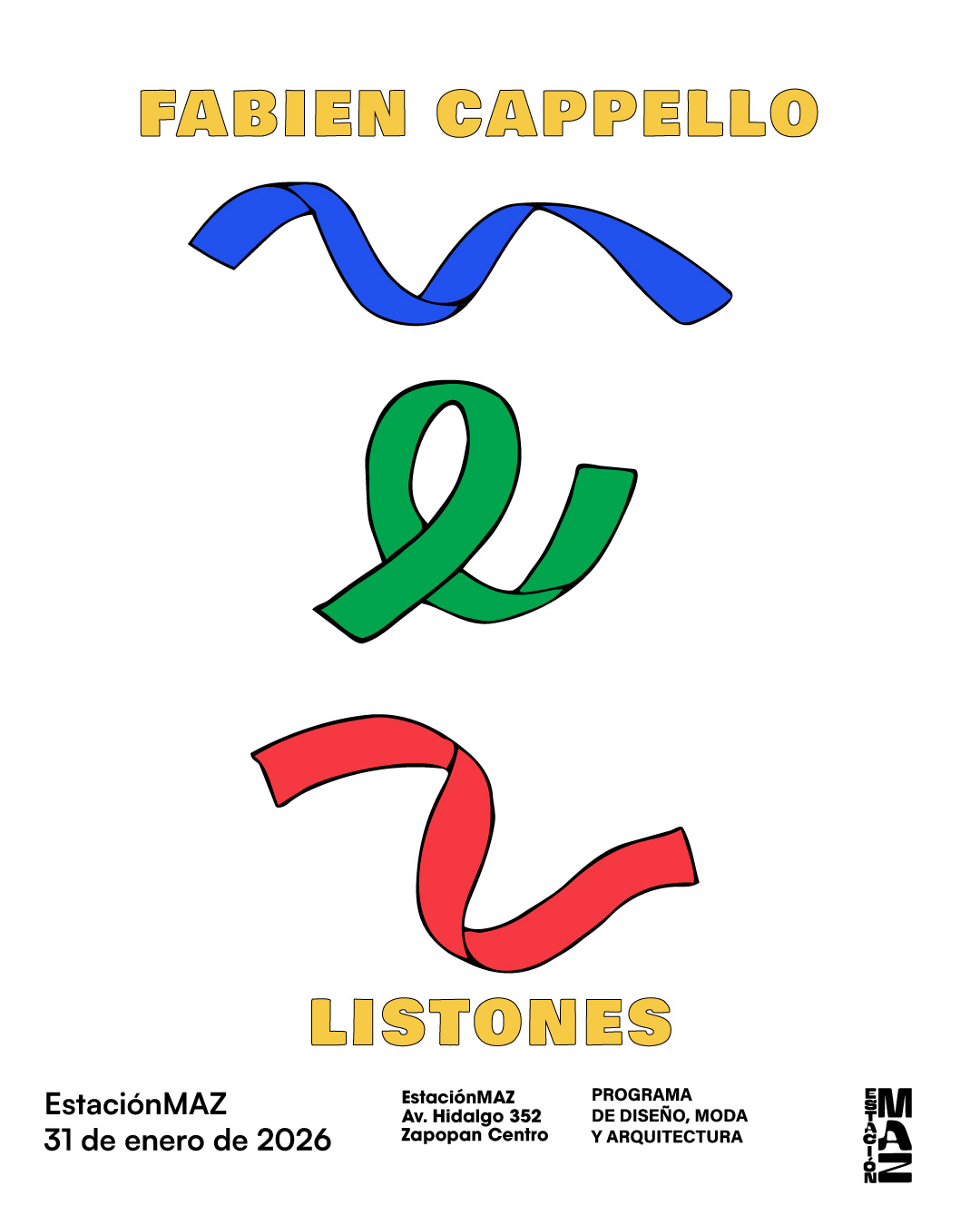
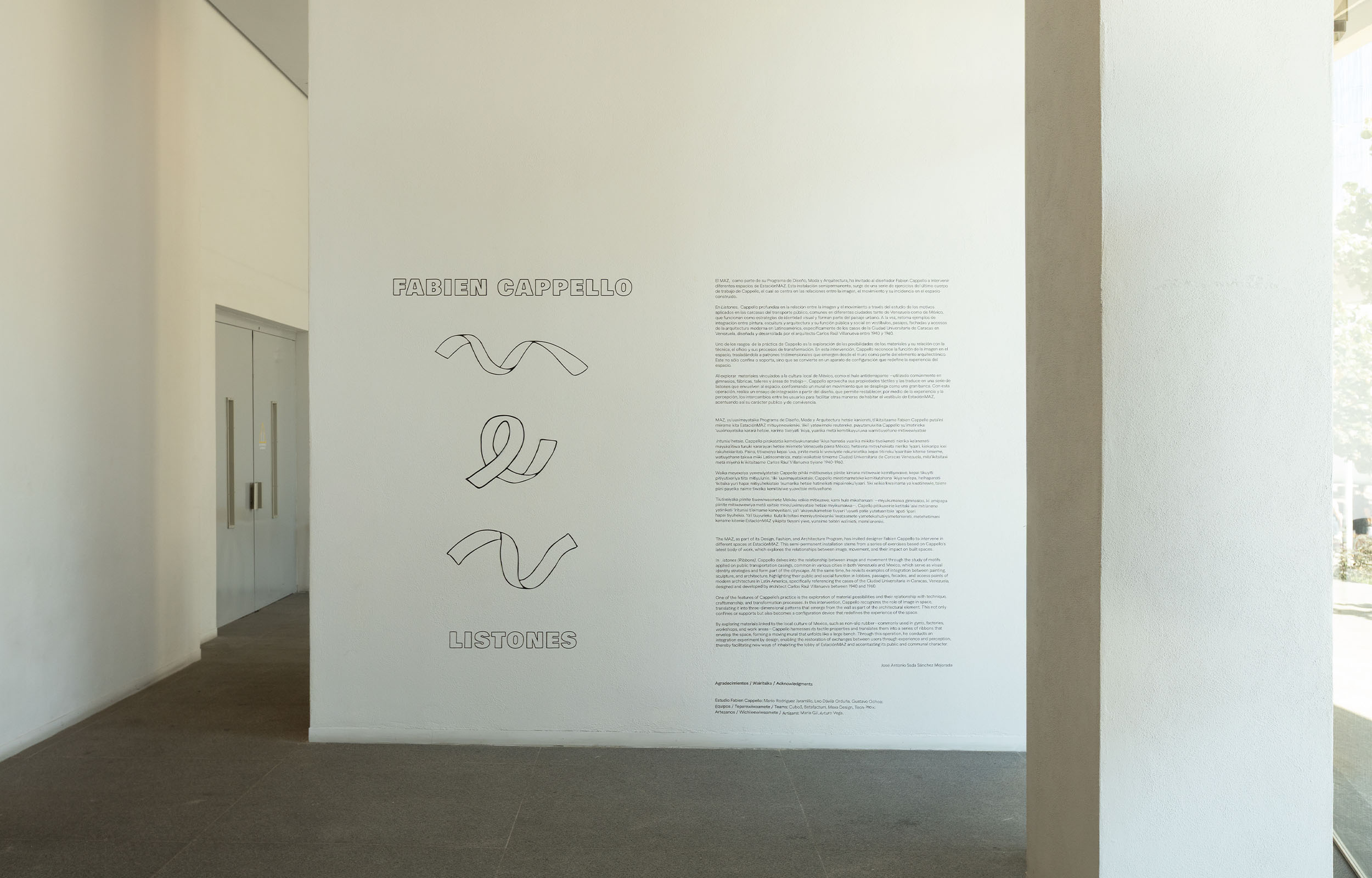
Fabien Cappello: Listones (Ribbons)
From January 31, 2026
Design, Fashion, and Architecture Program
Coordinated by: José Antonio Sada Sánchez Mejorada
EstaciónMAZ Lobby
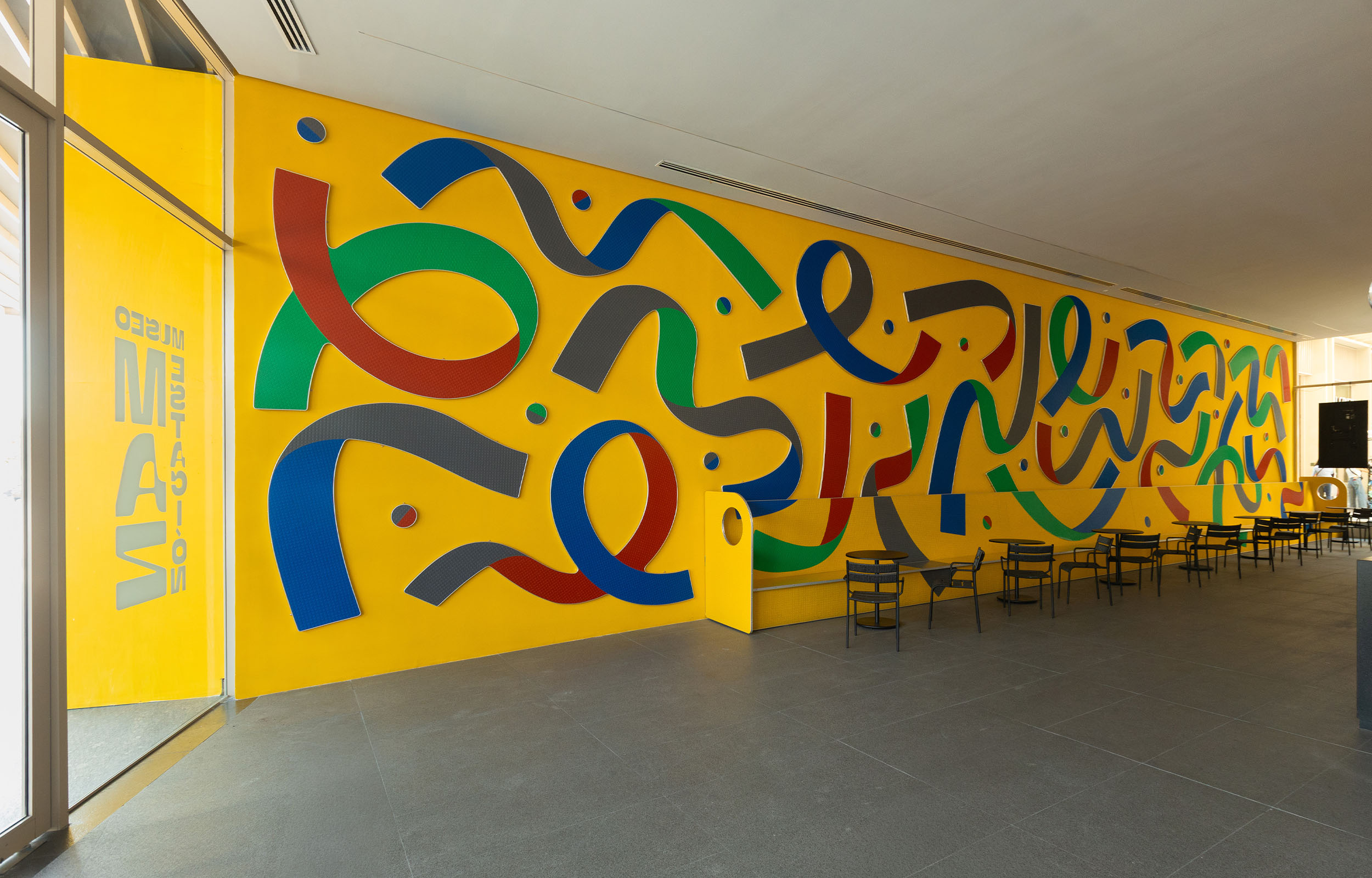
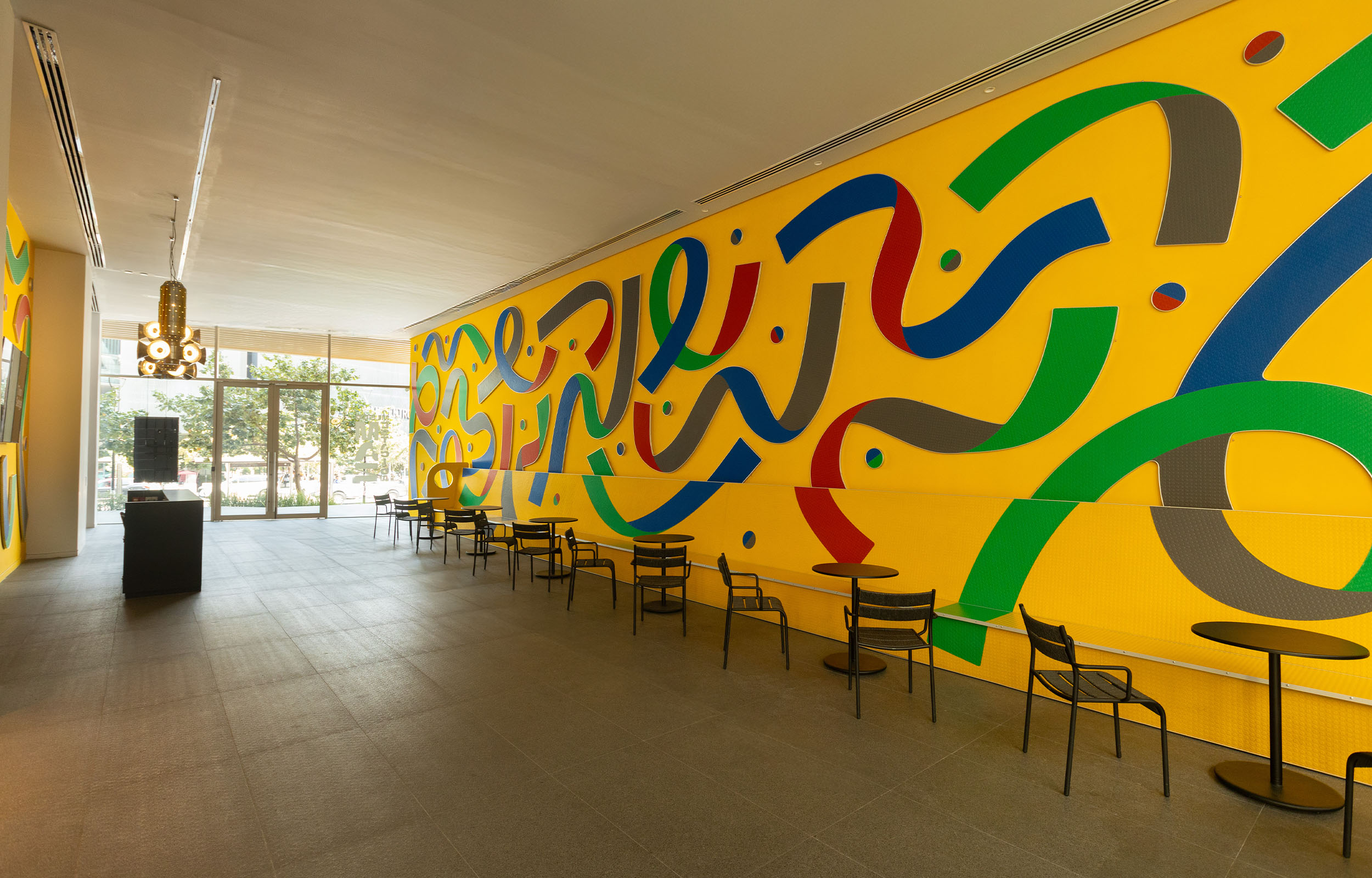
The Zapopan Art Museum (MAZ), as part of its Design, Fashion, and Architecture Program, has invited designer Fabien Cappello to intervene in various spaces of EstaciónMAZ. This semi-permanent installation arises from a series of exercises from Cappello’s latest body of work, which focuses on the relationships between image, movement, and their impact on the built space.
In Listones (Ribbons), Cappello delves into the relationship between image and movement through the study of patterns applied to the casings of public transportation, common in different cities in both Venezuela and Mexico, which function as visual identity strategies and are part of the urban landscape. At the same time, he references examples of integration between painting, sculpture, and architecture, as well as their public and social function in lobbies, passages, facades, and access points of modern architecture in Latin America, specifically from the case of the Ciudad Universitaria in Caracas, Venezuela, designed and developed by architect Carlos Raúl Villanueva between 1940 and 1960. According to Sybil Moholy-Nagy, Ciudad Universitaria offers artists and architects the only existing testing ground to evaluate the integrity of the three plastic arts among themselves. For Villanueva, mechanical production systems through technology and technique were fundamental to the integration of the arts and architecture in public spaces, highlighting the importance that industrial design would have in its future development.
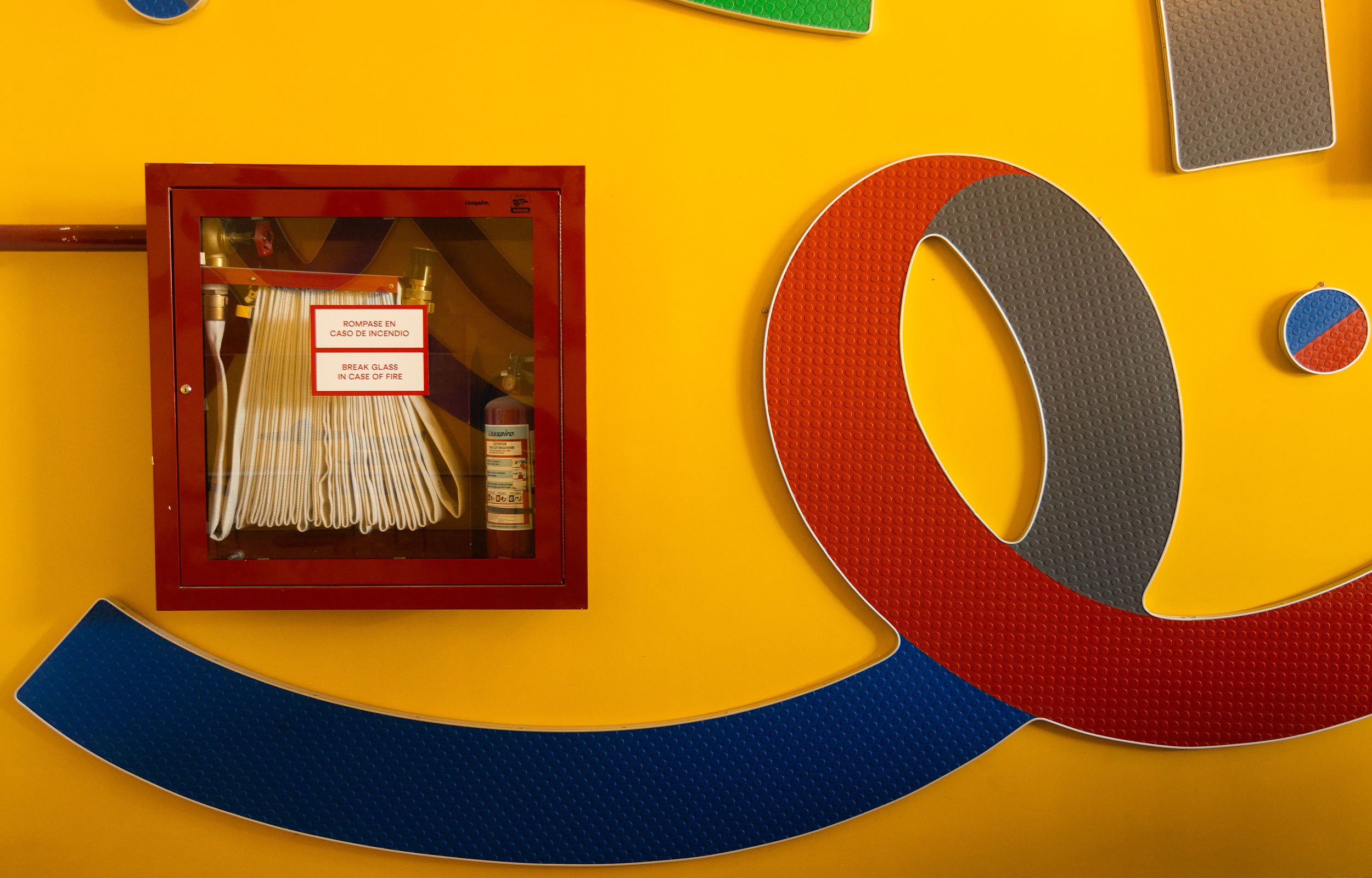
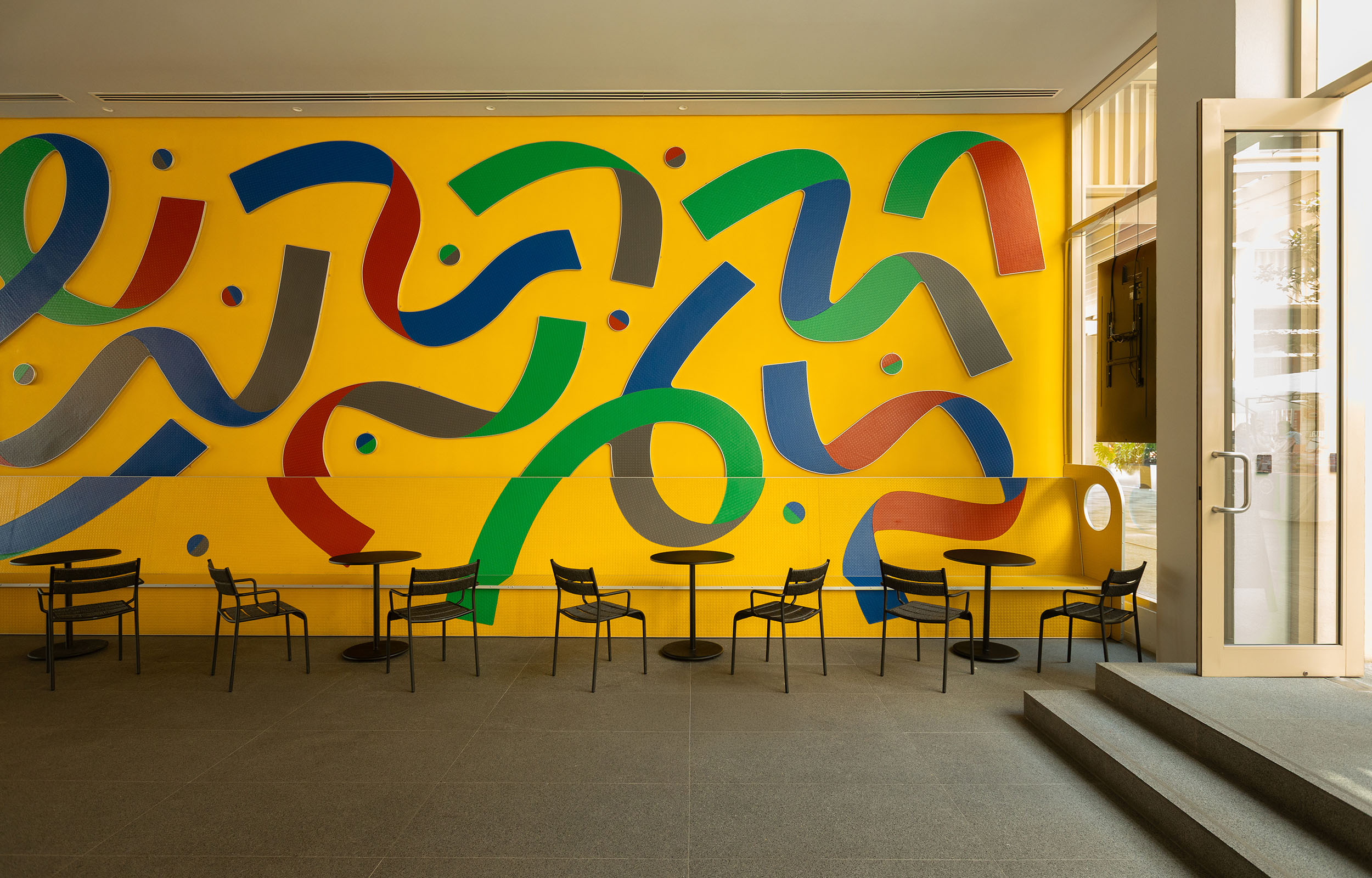
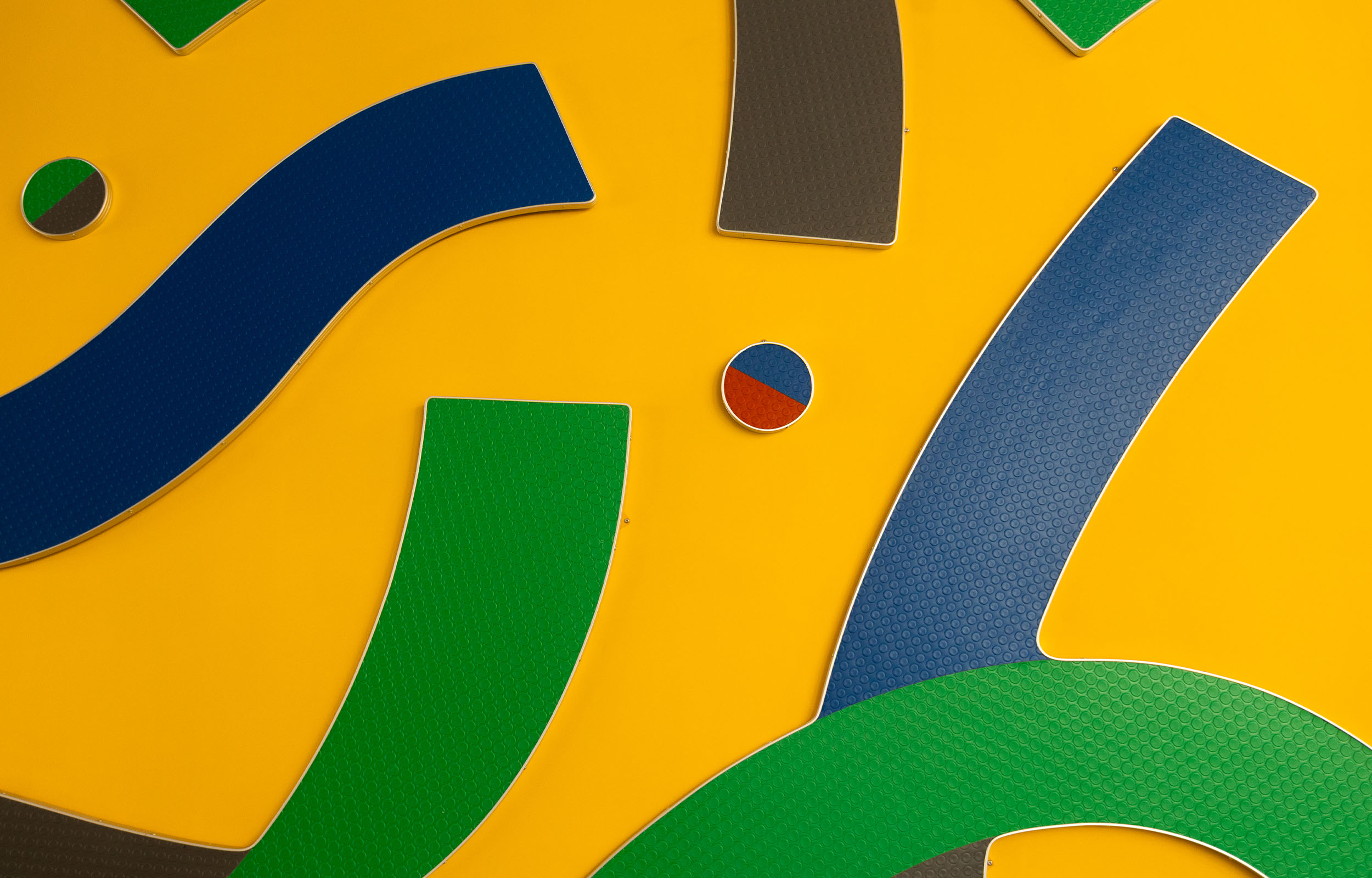
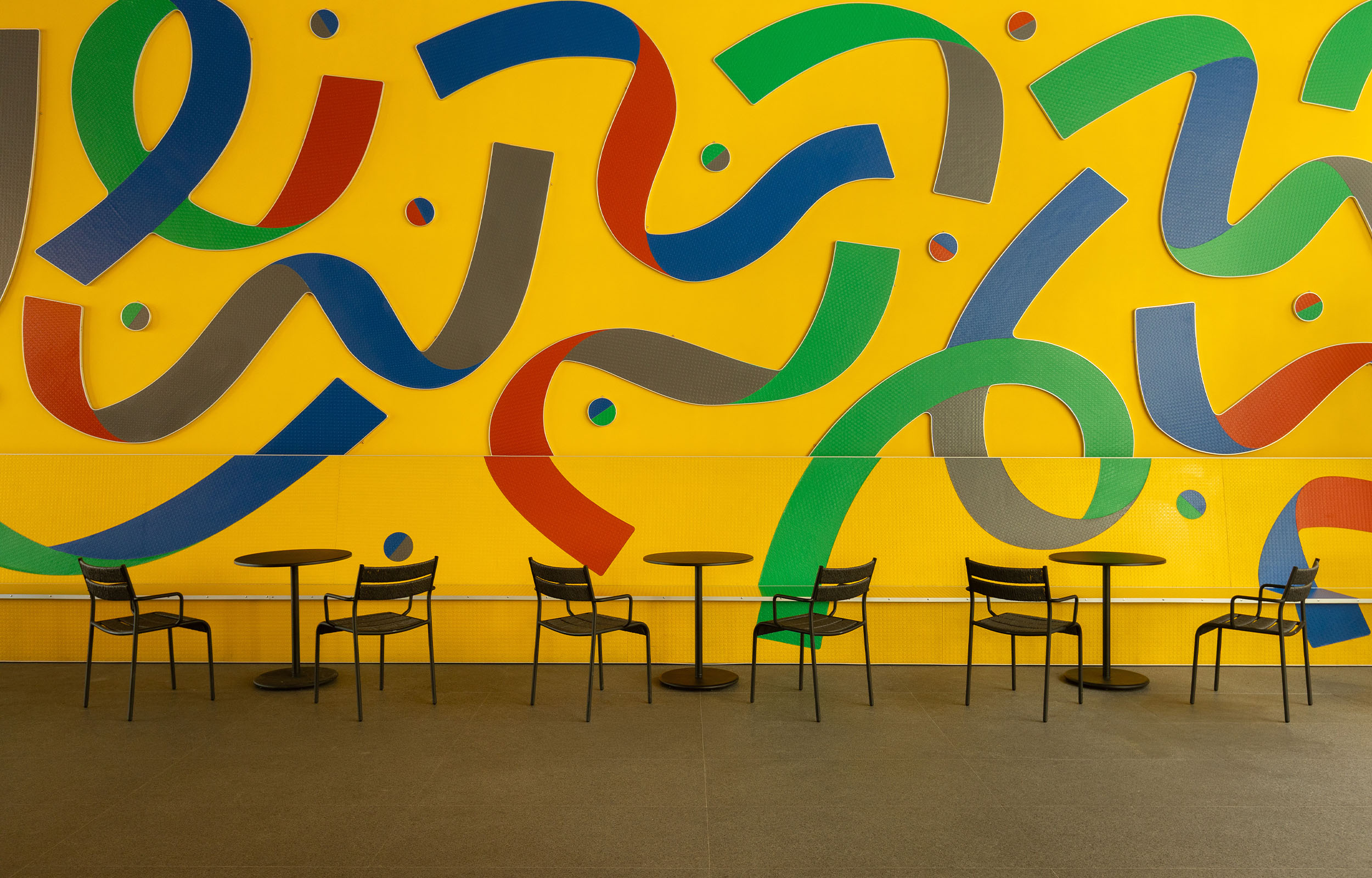
One of the most distinctive traits of Cappello’s practice is the importance he places on exploring the possibilities of materials and their relationship with technique, craft, and their transformation processes. In this intervention, Cappello analyzes and recognizes the function of image in space, translating it into three-dimensional patterns that emerge from the wall as part of the architectural element. This not only confines, supports, or delineates but transforms into a configurative apparatus that redefines the experience of space.
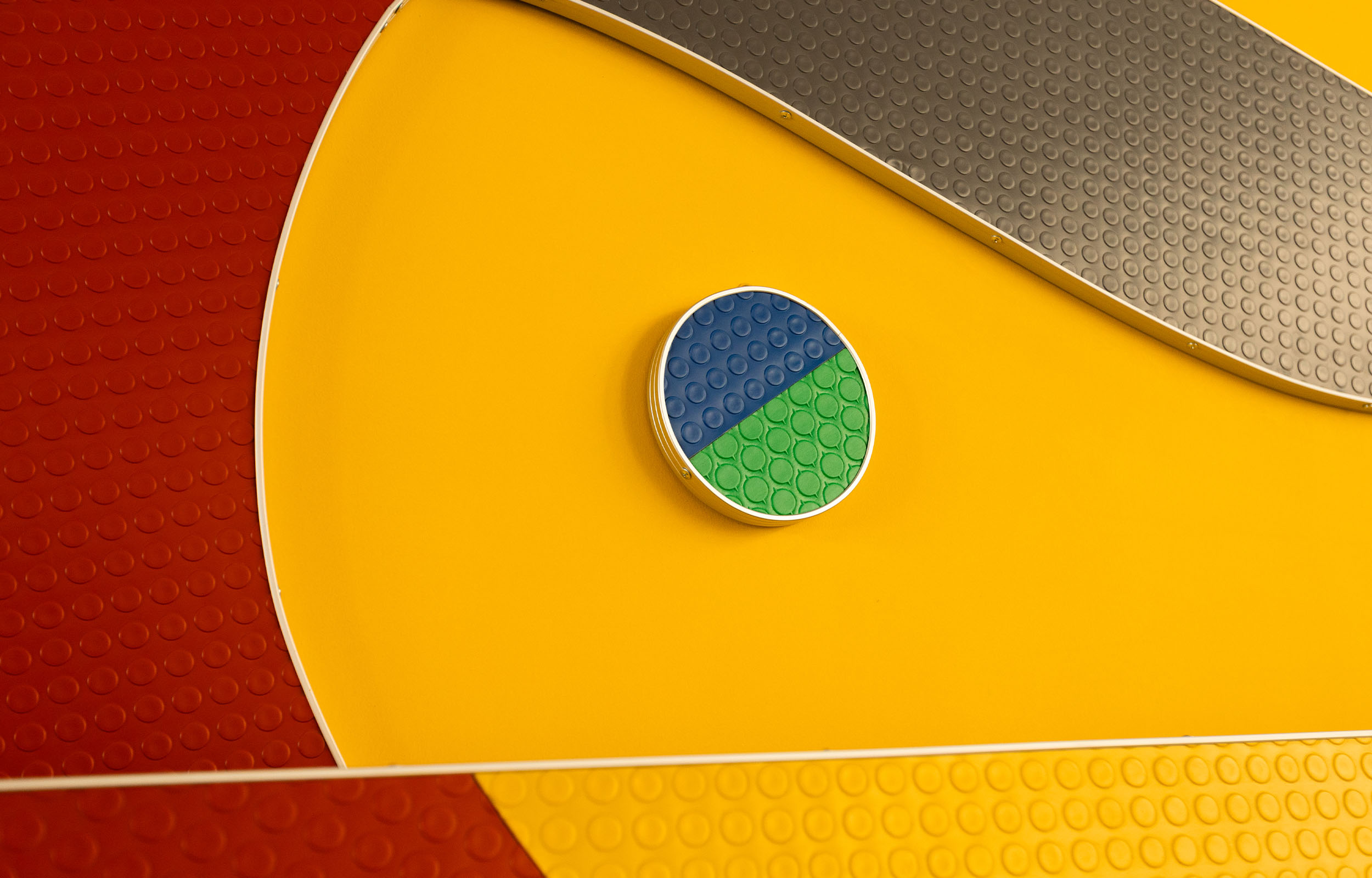
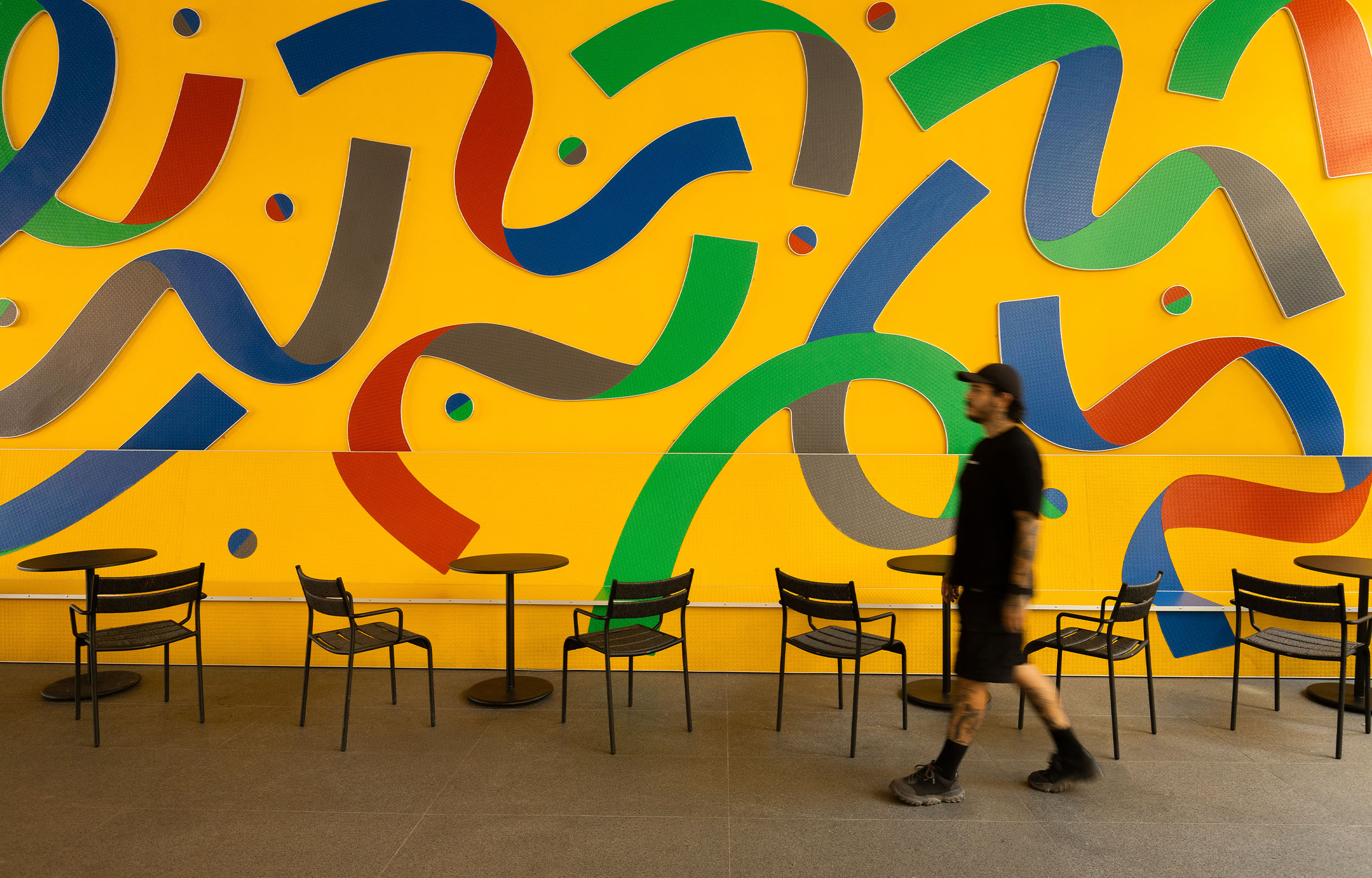
By exploring the potential of materials linked to the local culture of Mexico, such as anti-slip rubber—commonly used in gyms, factories, workshops, and work areas—Cappello takes advantage of its tactile properties and translates them into a series of strips that wrap around the space, forming a moving mural that unfolds like a large bench. With this operation, Fabien Cappello conducts an essay of integration through design, allowing for the reestablishment, through experience and perception, of exchanges among users to facilitate other ways of inhabiting the lobby of EstaciónMAZ, thus emphasizing its public and communal character.