

Yukinori Yanagi: El Mare Pacificum
Curator: Viviana Kuri Haddad
From March 26 to October 11, 2026
EstaciónMAZ
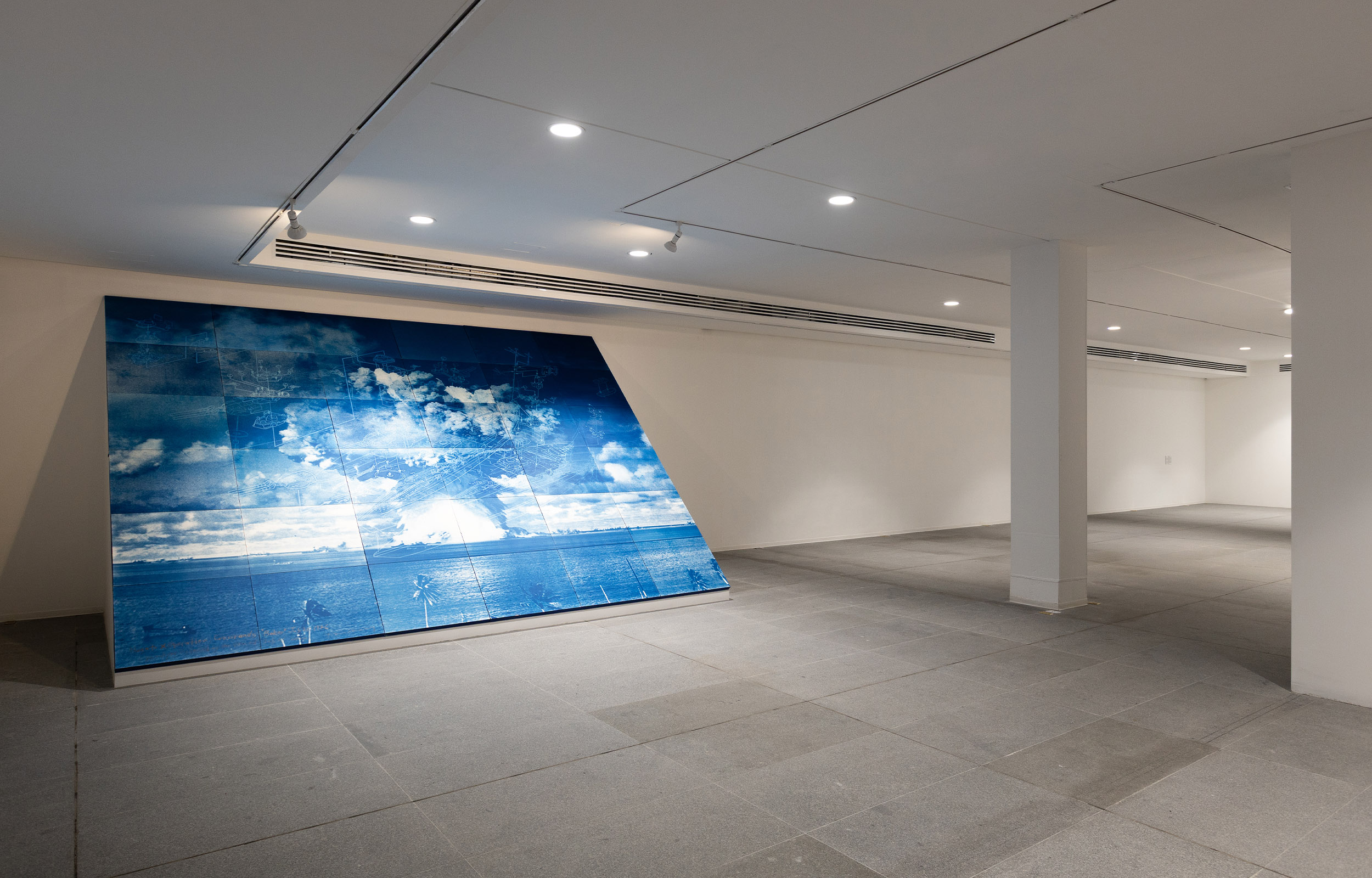
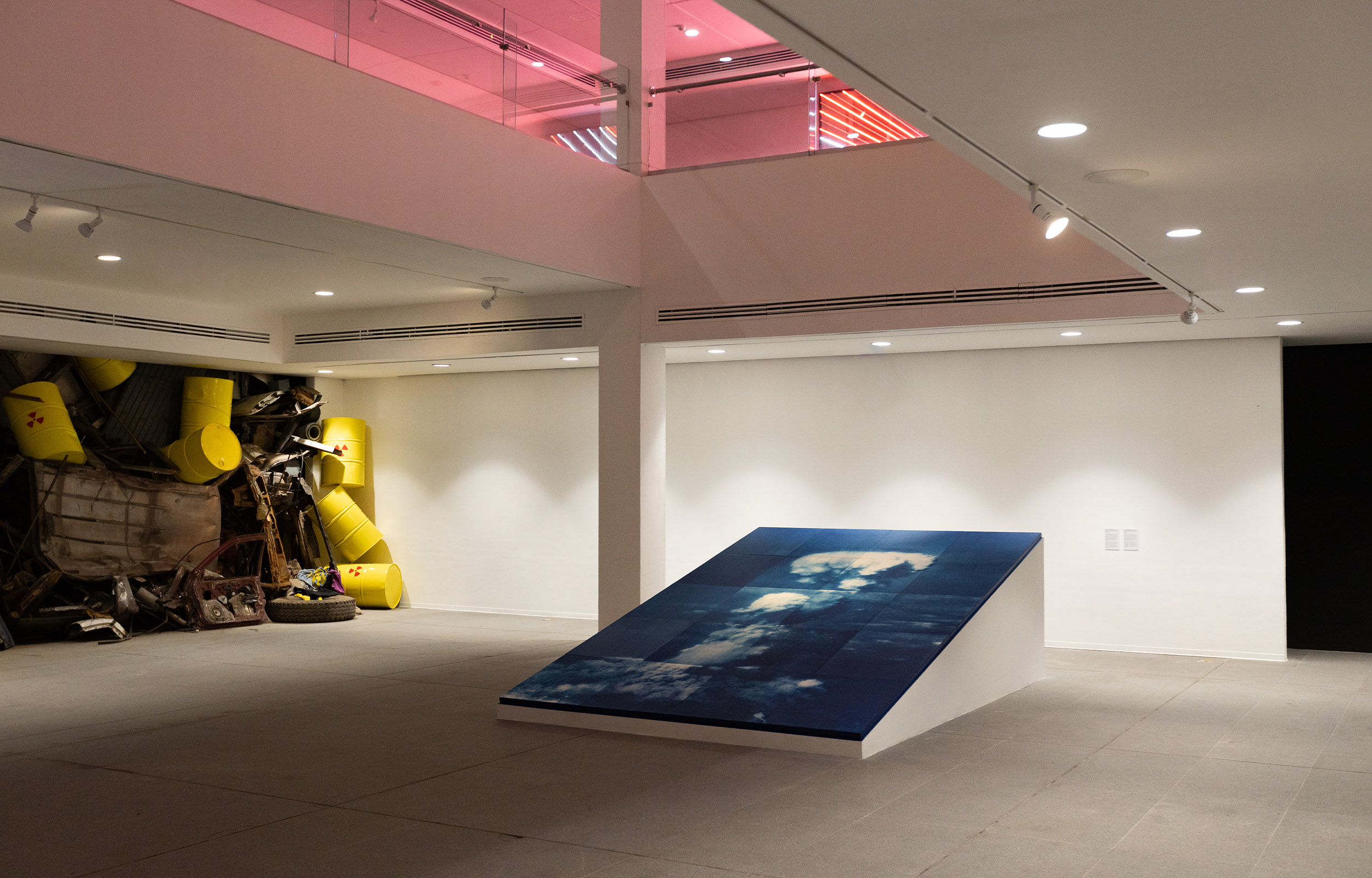
The Pacific Ocean has a deceptive name: it suggests calm and quietude, as if its waters offered a promise of serenity. History, however, has repeatedly given the lie to this illusion. This vast maritime territory has been the scene of some of the greatest violence of the twentieth century: the Pacific War ―a conflict that arose out of imperial Japan’s expansion into the islands of the Pacific and of Southeast Asia―, the atomic bombs that fell on Hiroshima and Nagasaki, and the nuclear tests undertaken by the governments of France and the United States on the Mururoa and Bikini atolls in Oceania.
For the Japanese artist Yukinori Yanagi, crossing this ocean replete with memories also meant confronting the longest frontier of his native land. Japan, as an archipelago, can be traveled from one end to the other without coming into contact with any other country. Given this insular condition, one can understand Yanagi’s interest in exposing the fiction behind the limits established by nation-states and the patriotic culture that sustains them, as well as his fascination with the Pacific Ocean, a liquid border that he has crossed numerous times in the course of his life.
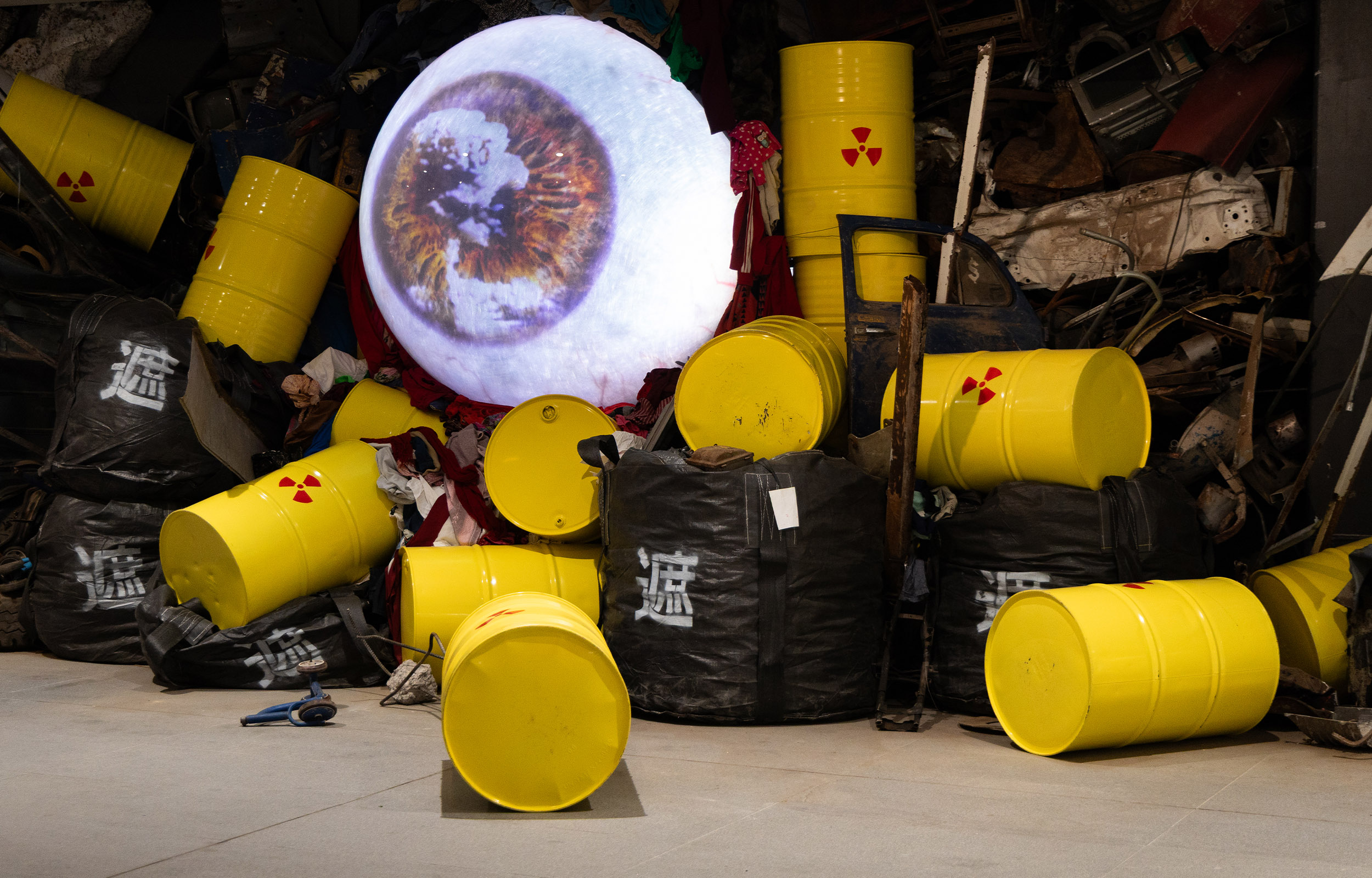
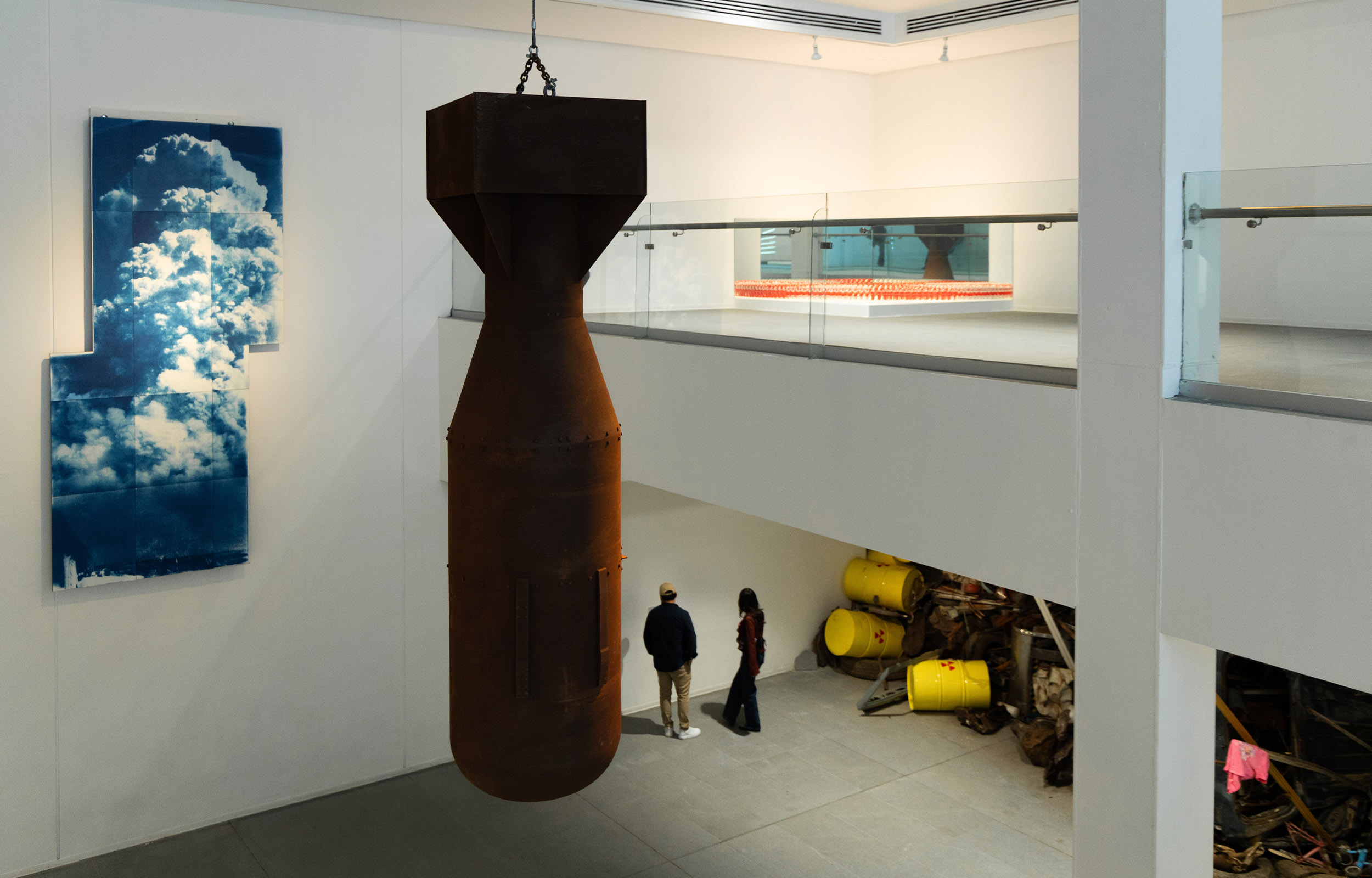
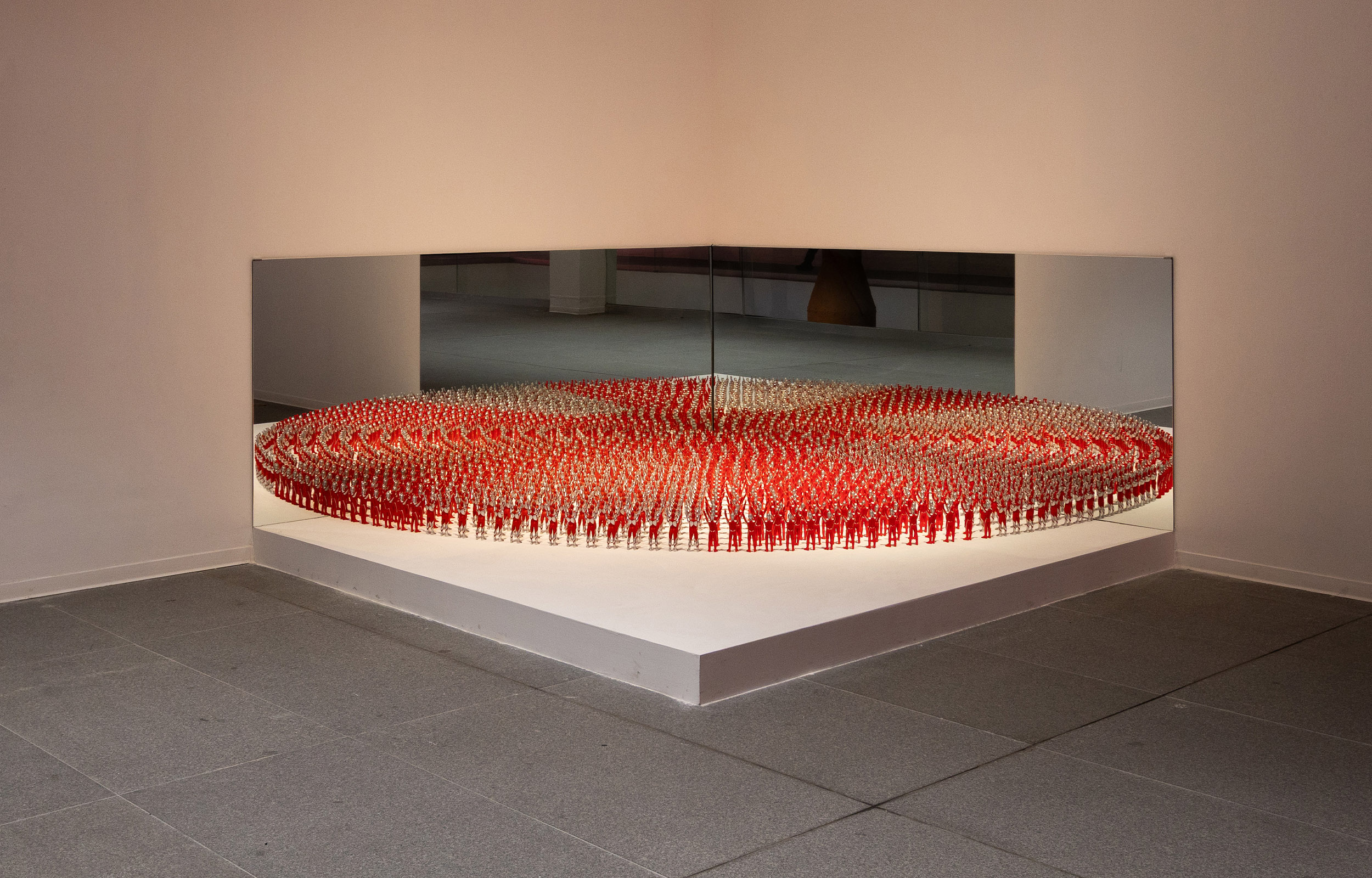
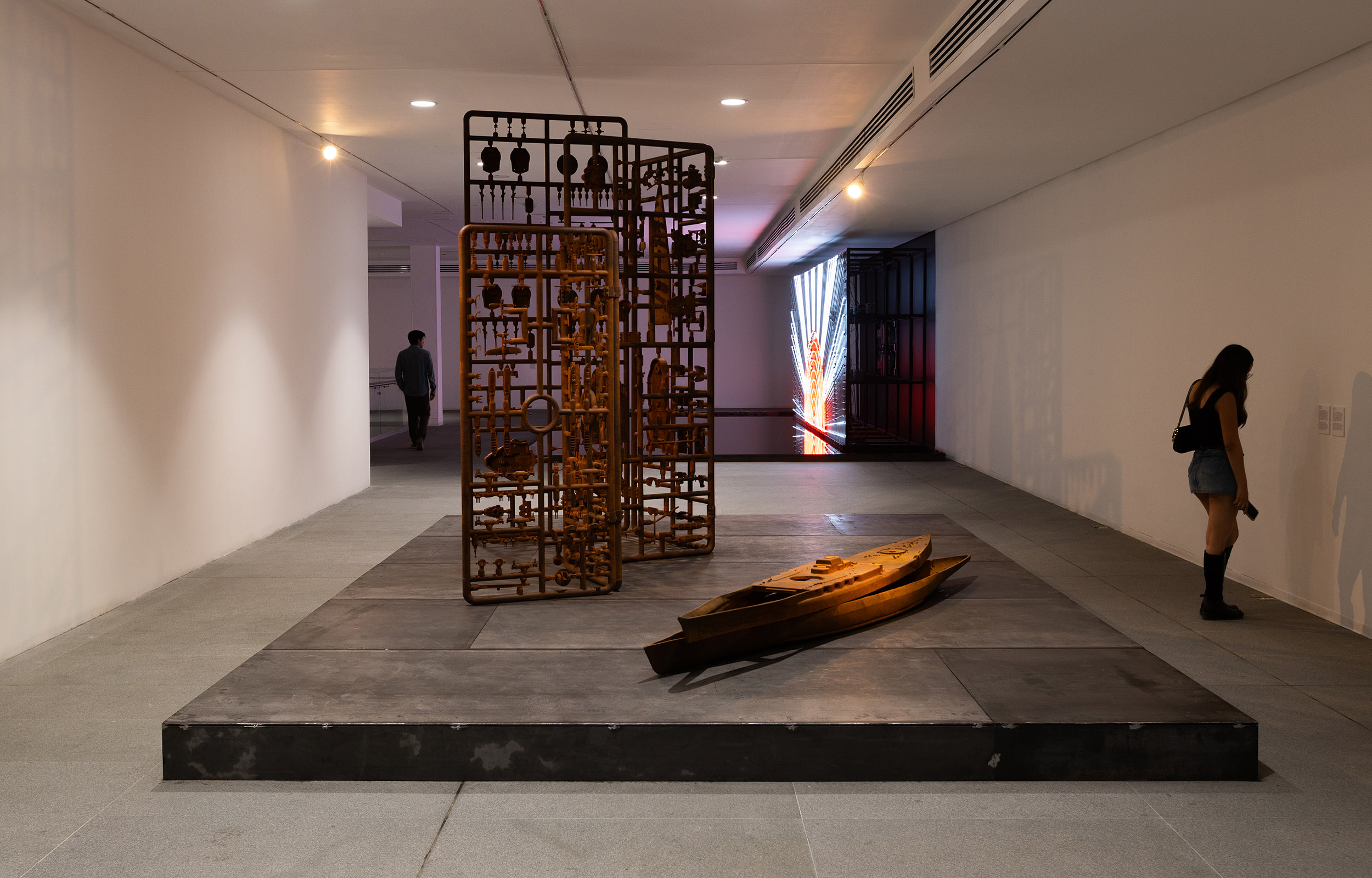
A fundamental part of his work consists of revisiting the great human tragedies that have changed the course of history, such as the Second World War. Works like Absolute Dud (2007-2016) and From the Sky (2024) function as emblems that recall the heartrending consequences of the war. At the same time, the artist interweaves pointed reflections on issues such as the destructive capacity of nuclear weapons, using pop culture icons that have found a place in the collective imaginary, such as Godzilla.
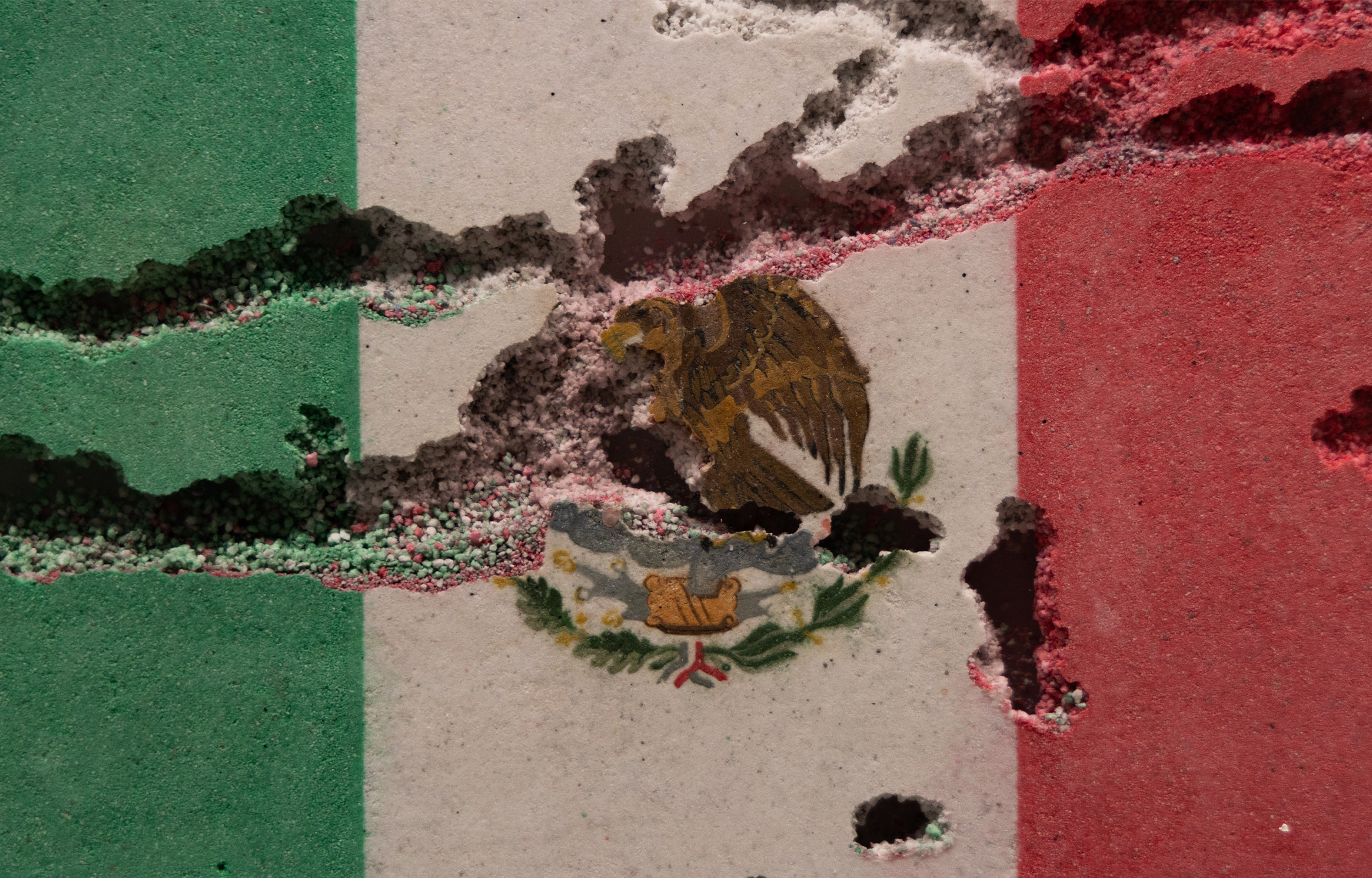
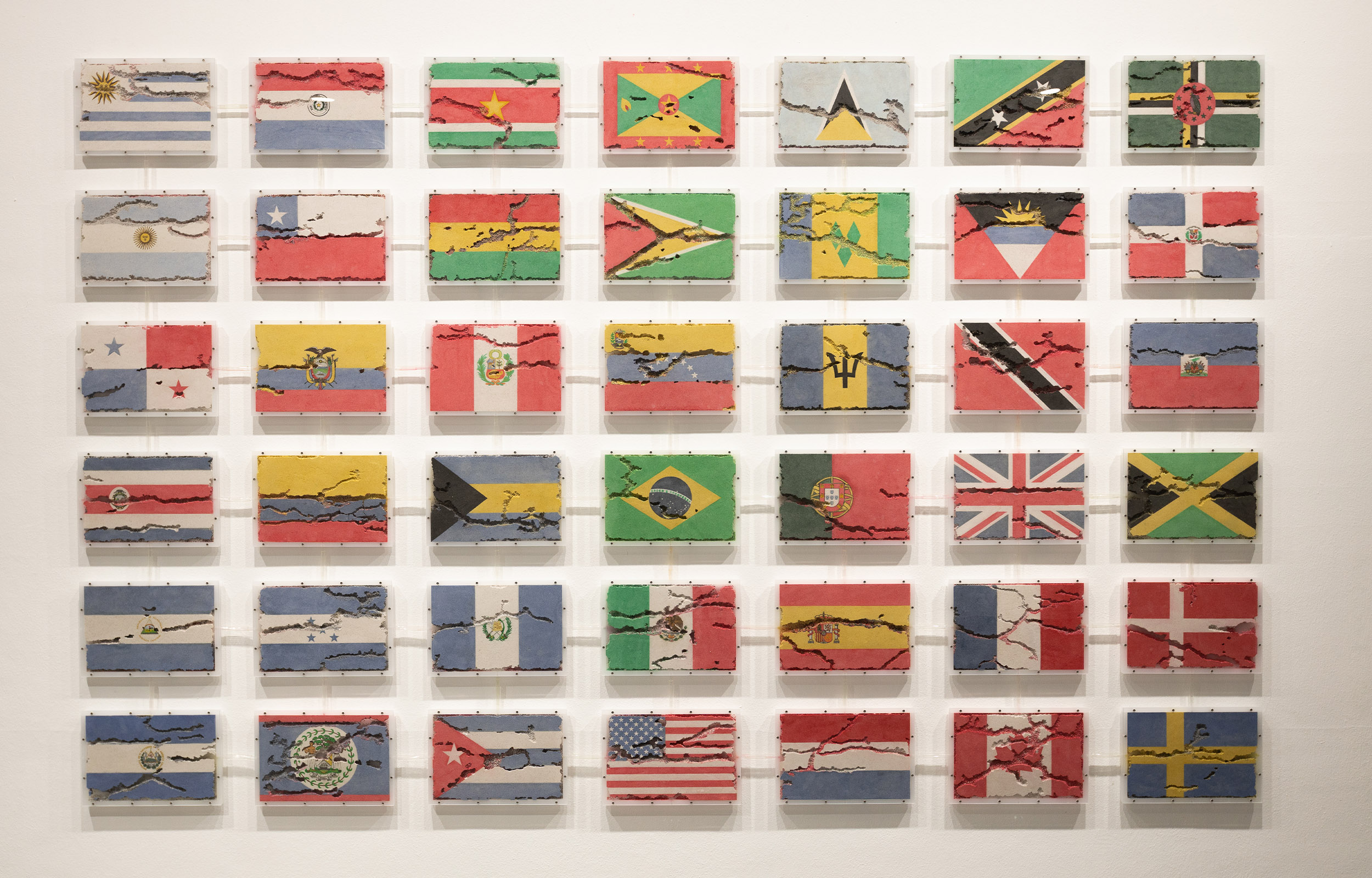
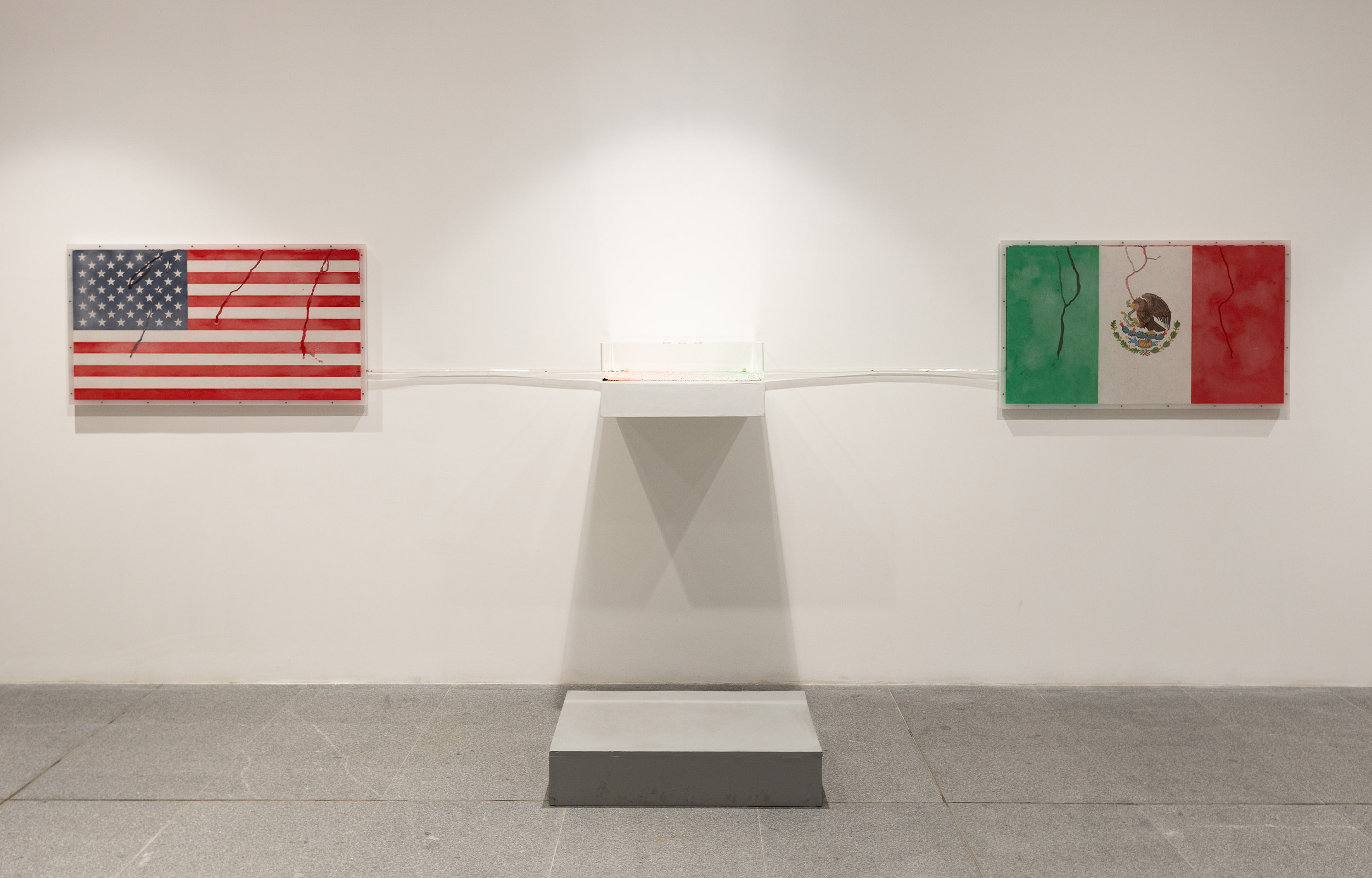
Through the use and erosion of flags, Yanagi destabilizes the very notion of the border. In his installations, these limits are dissolved, revealing the instability of the categories established by the contemporary world. The surroundings we inhabit constitute in fact a constellation of interconnected places, rather than a fixed, delimited territory.
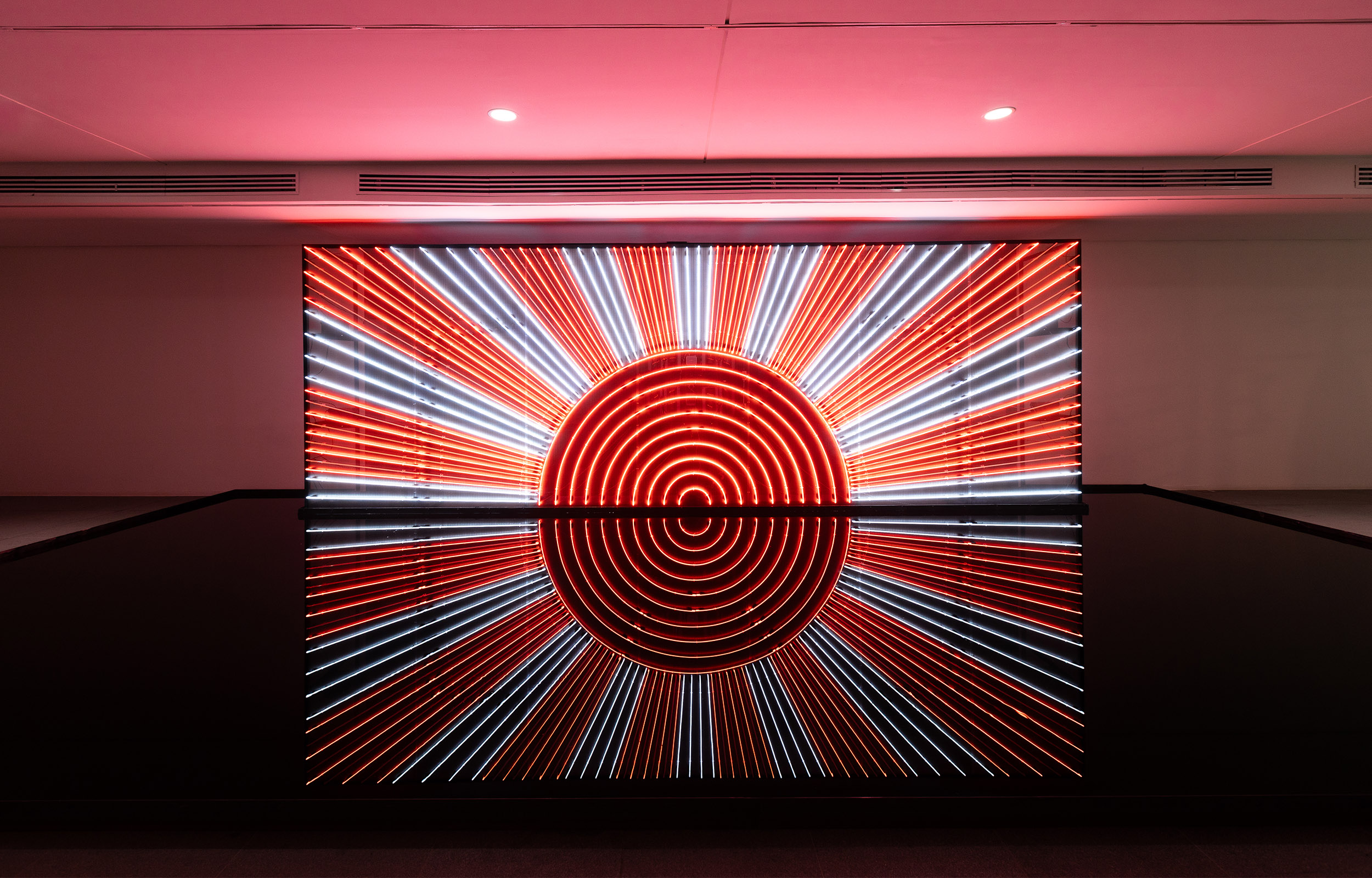
In the aftermath of the Cold War and the fall of the Berlin Wall, particularly fertile ground emerged for questioning the construction of national identity. In this context, Yanagi began to critically examine symbols associated with Japanese militarism, such as the hinomaru, or “rising sun.” Riddled by contradictions, this national emblem alludes to both the geographical location of Japan ―in the east, where the sun rises― and the myth of the emperor descending from Amaterasu, goddess of the sun and ruler of the realm of the gods. The same symbol, however, was adopted as a military banner during the Japanese campaigns of occupation in Southeast Asia.
The artist’s work shows how these emblems condense narratives of power and how exacerbated nationalism can have devastating consequences, setting the nuclear tragedy against the national symbols of the very country that suffered it, as if they were two sides of the same coin.
For Yanagi, art always implies a relation to others. Among all those others who are not ourselves, the dead occupy a central place, for with them it is no longer possible to establish direct communication informed by mutual understanding and reconciliation. Artistic practice can open a space for such an encounter: a way of maintaining a conversation between the past and the present.
