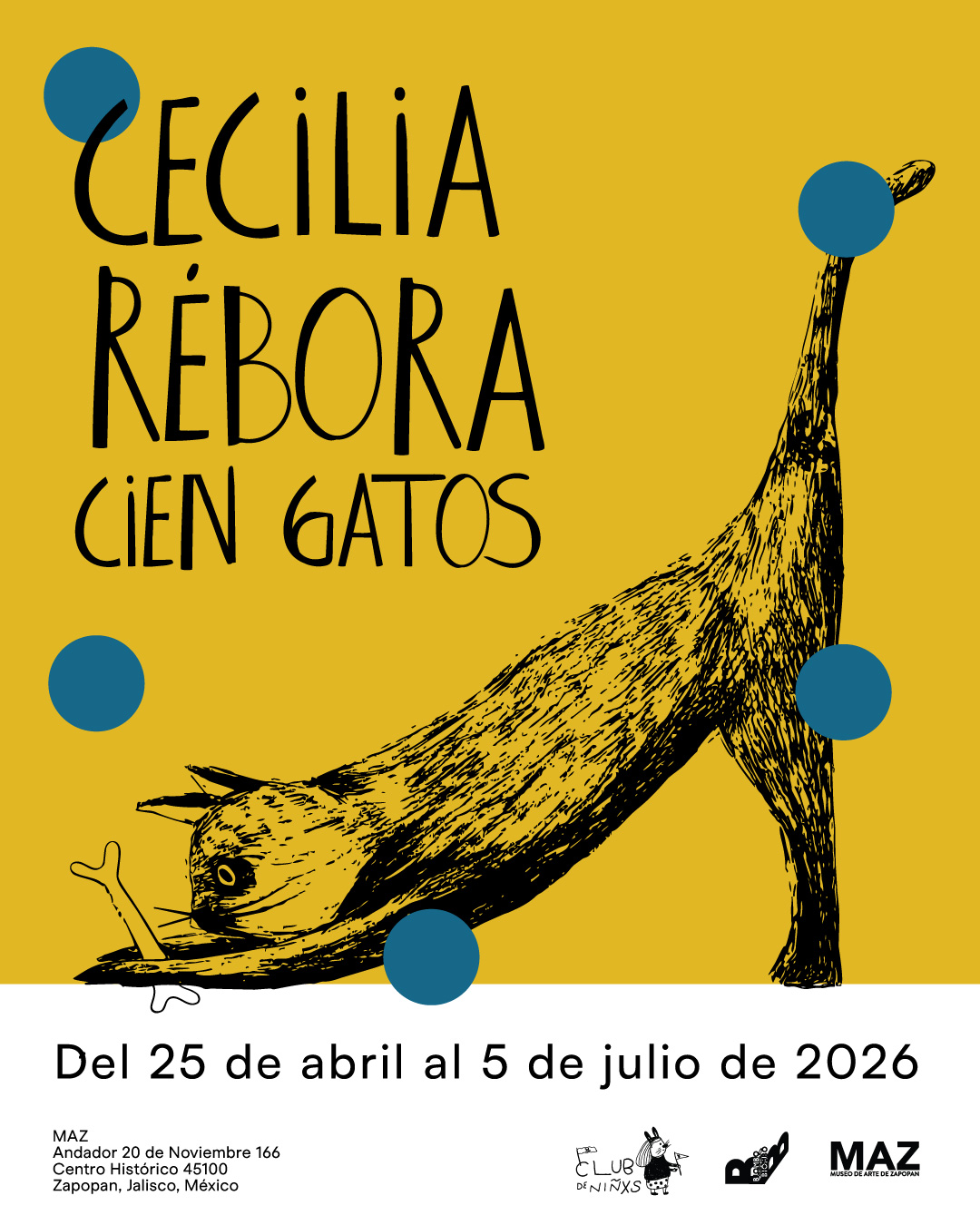
Cecilia Rébora: A Hundred cats
From April 25 to July 5, 2026
Biombo
Reading Room
In literature as in life, cats are characterized by their independence and their aura of mystery. Perhaps that is why they leave no one indifferent.
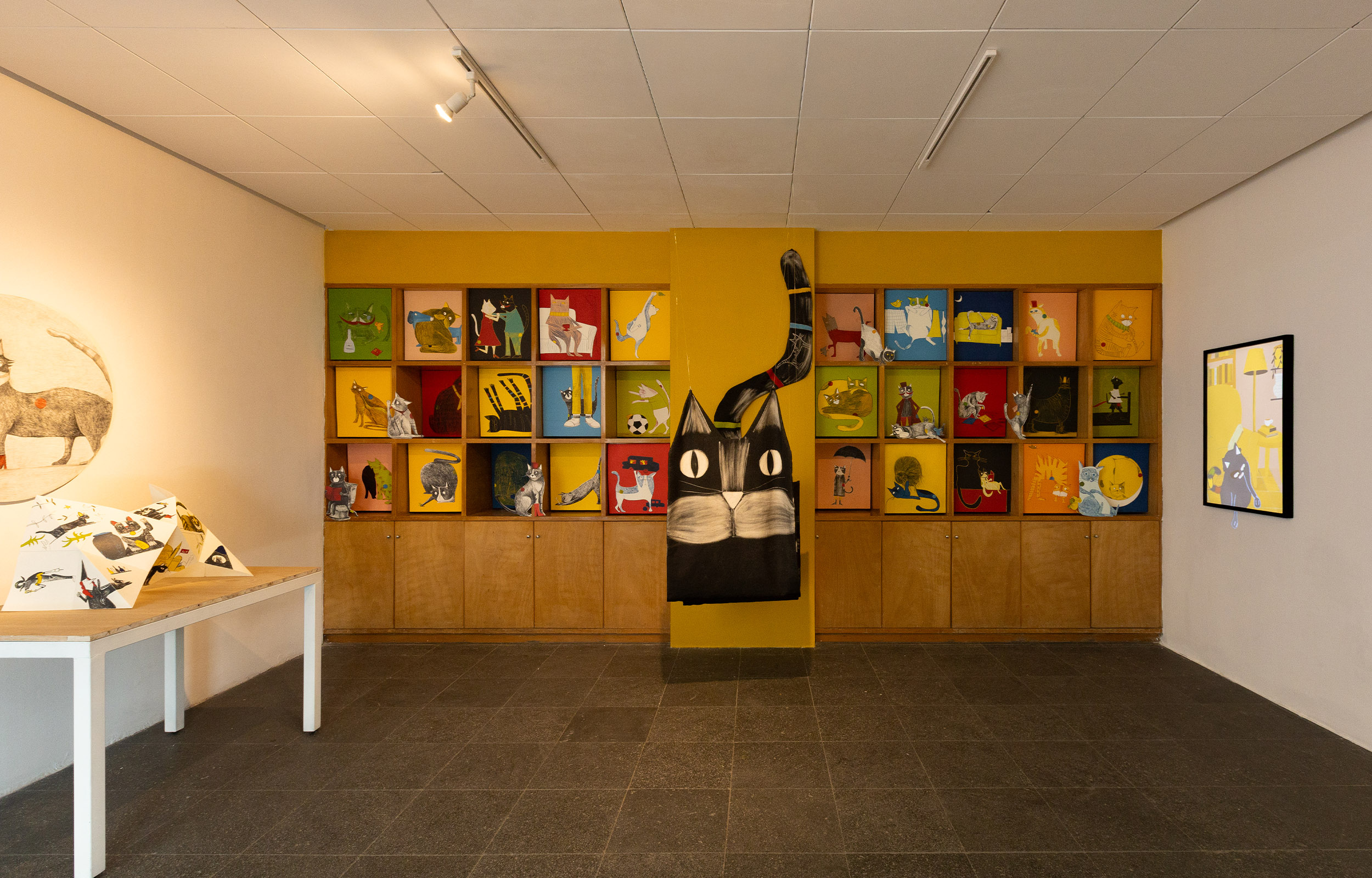
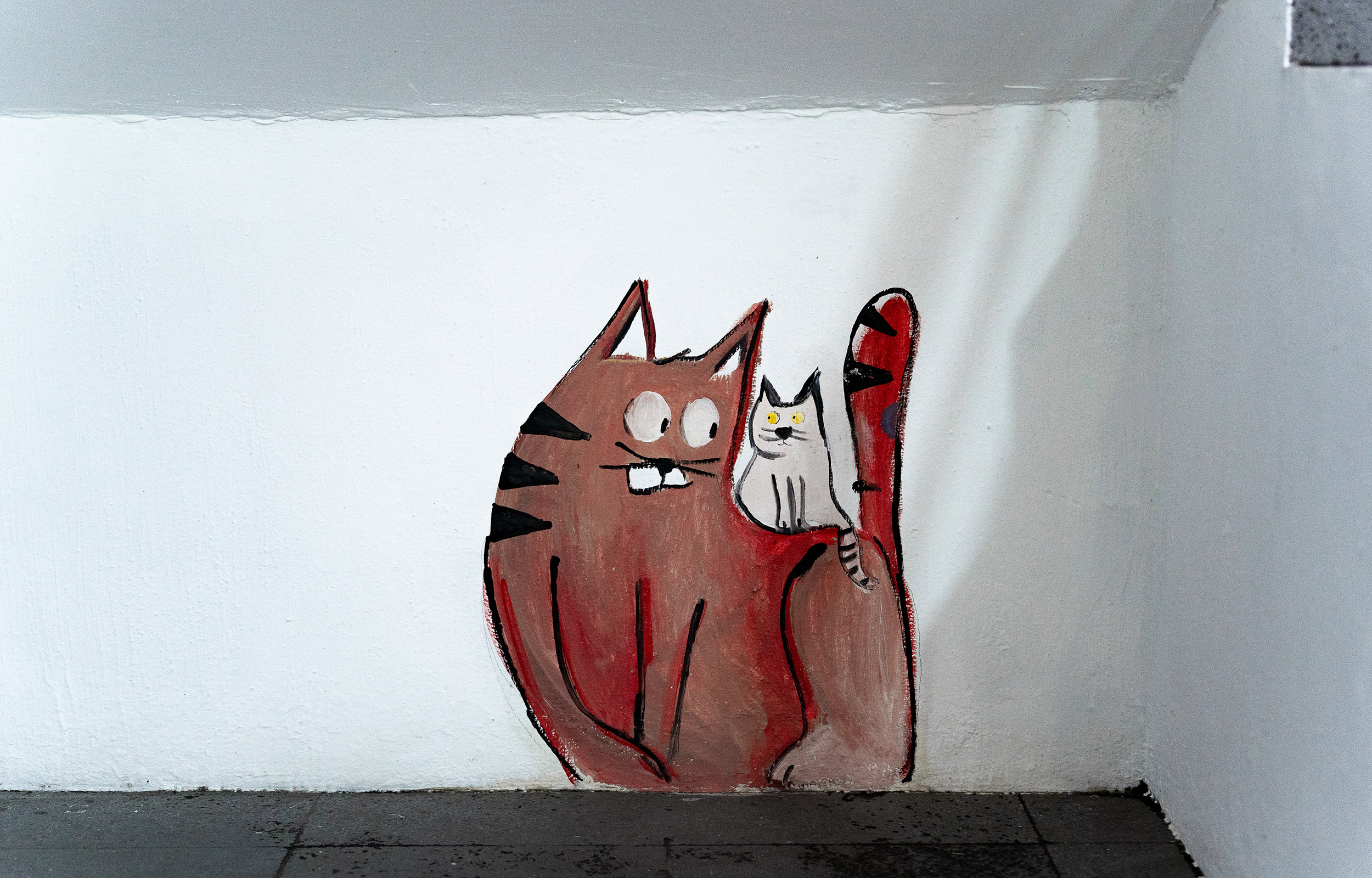
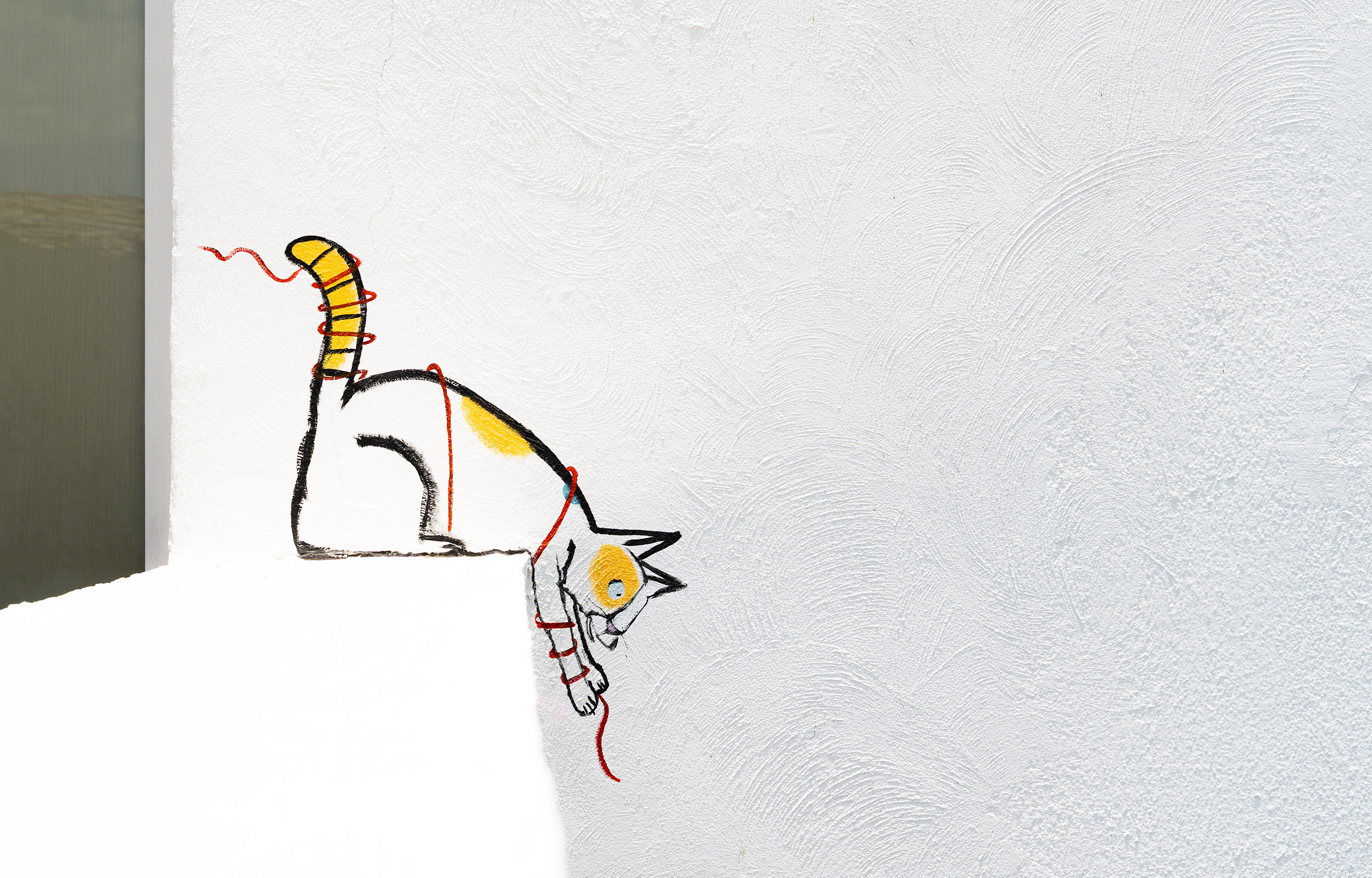
In the work of Cecilia Rébora ―author and illustrator of children’s books― the figure of the cat has been a constant presence: sometimes as a main character, sometimes in a secondary role. Returning again and again to the same animal has allowed her to try out variations, explore a range of gestures, and examine minute differences. This has produced a large repertoire in which cats are presented as changing and multiple, often seen in everyday situations, from a child’s vantage point, and seldom limited to a single meaning.
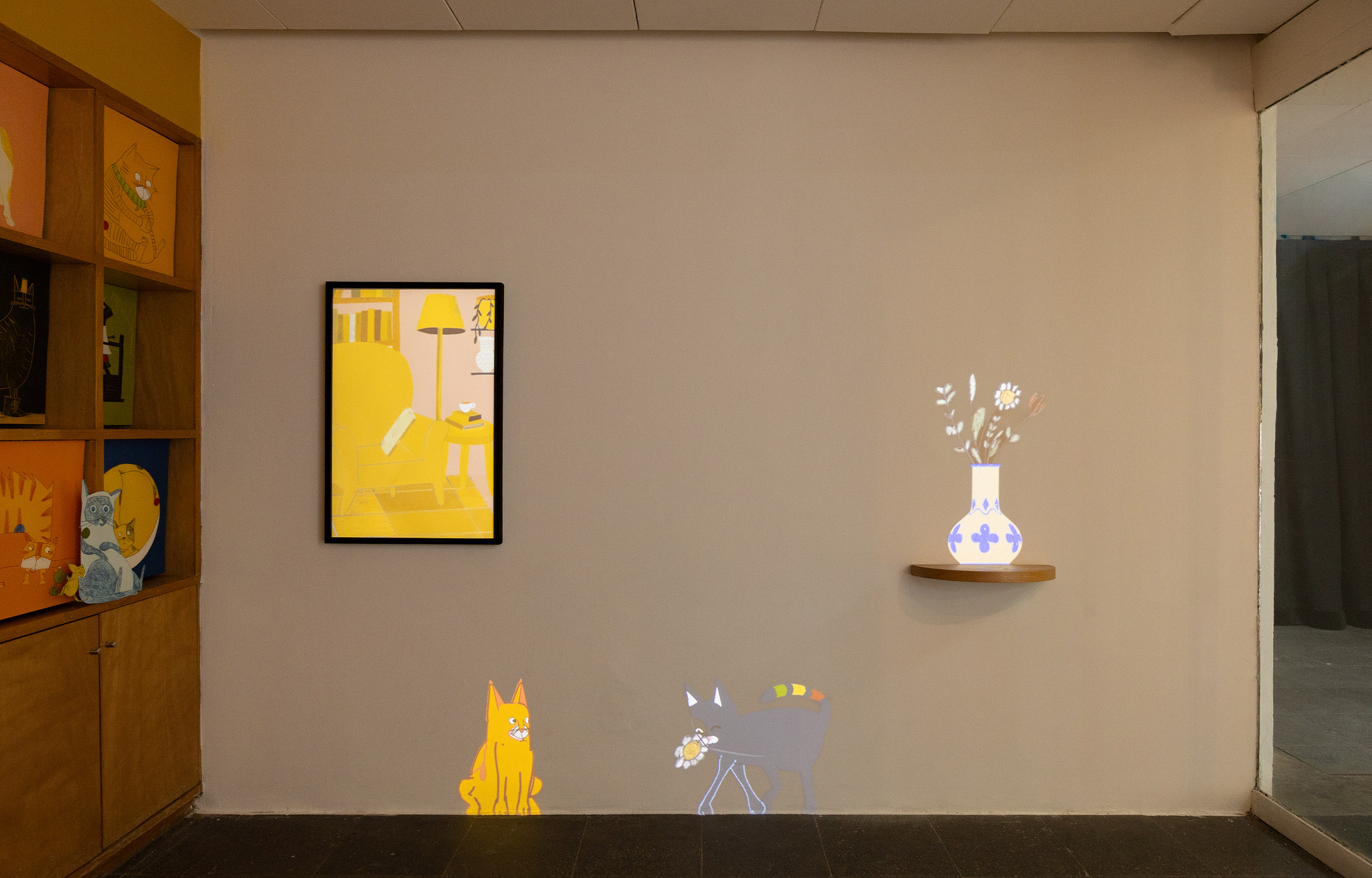
The language of illustration reminds us that reading can do without words and still function as narrative. Operating at the crossroads of text, image, and space, A Hundred Cats invites us to imagine and construct stories within the walls of the museum. Every cat contains a little scene, a mood, an action, a presence… Like the Cheshire Cat in Lewis Carroll’s Alice in Wonderland (1865), a cat can disappear and remain present nevertheless.
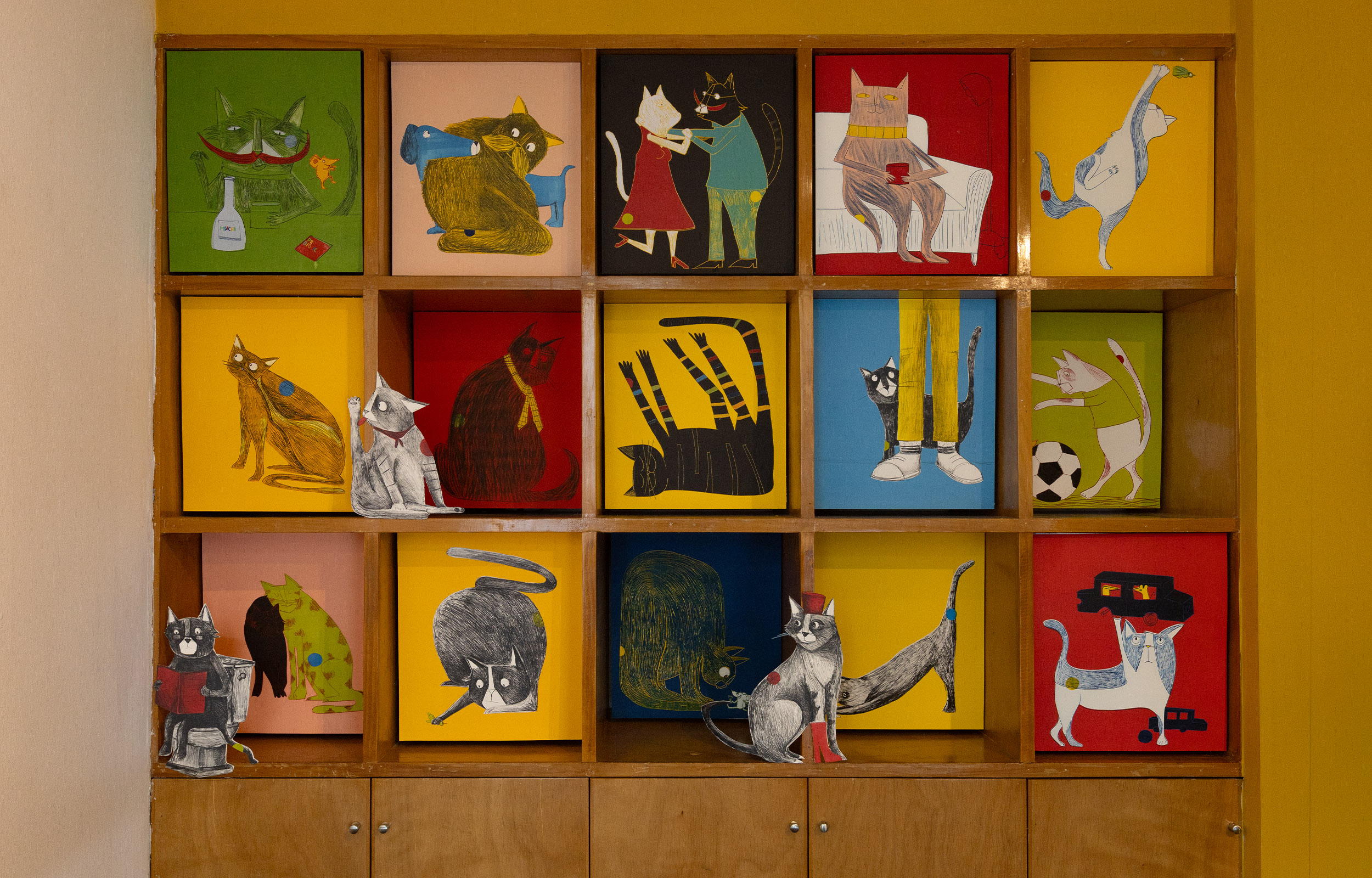
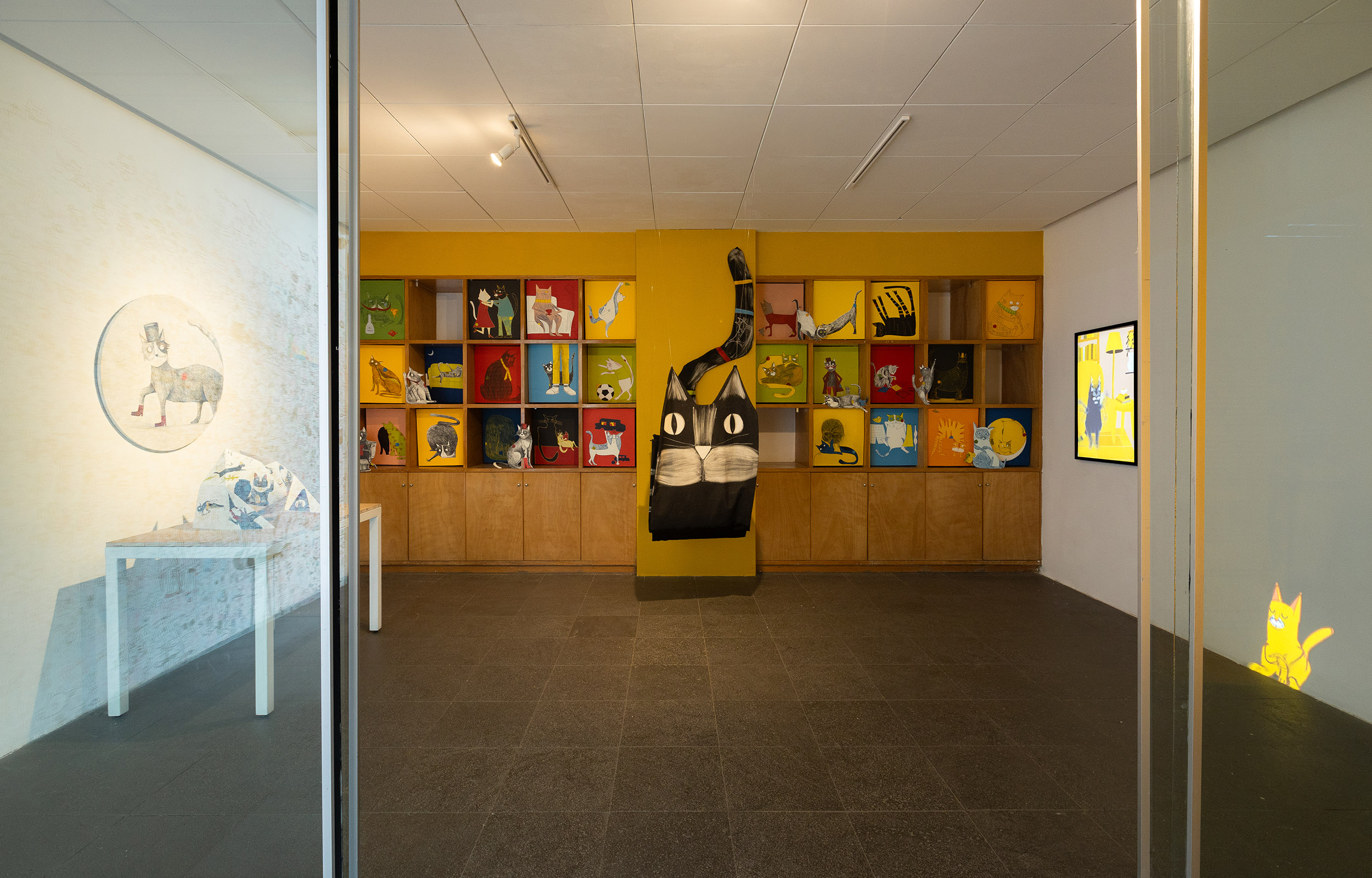
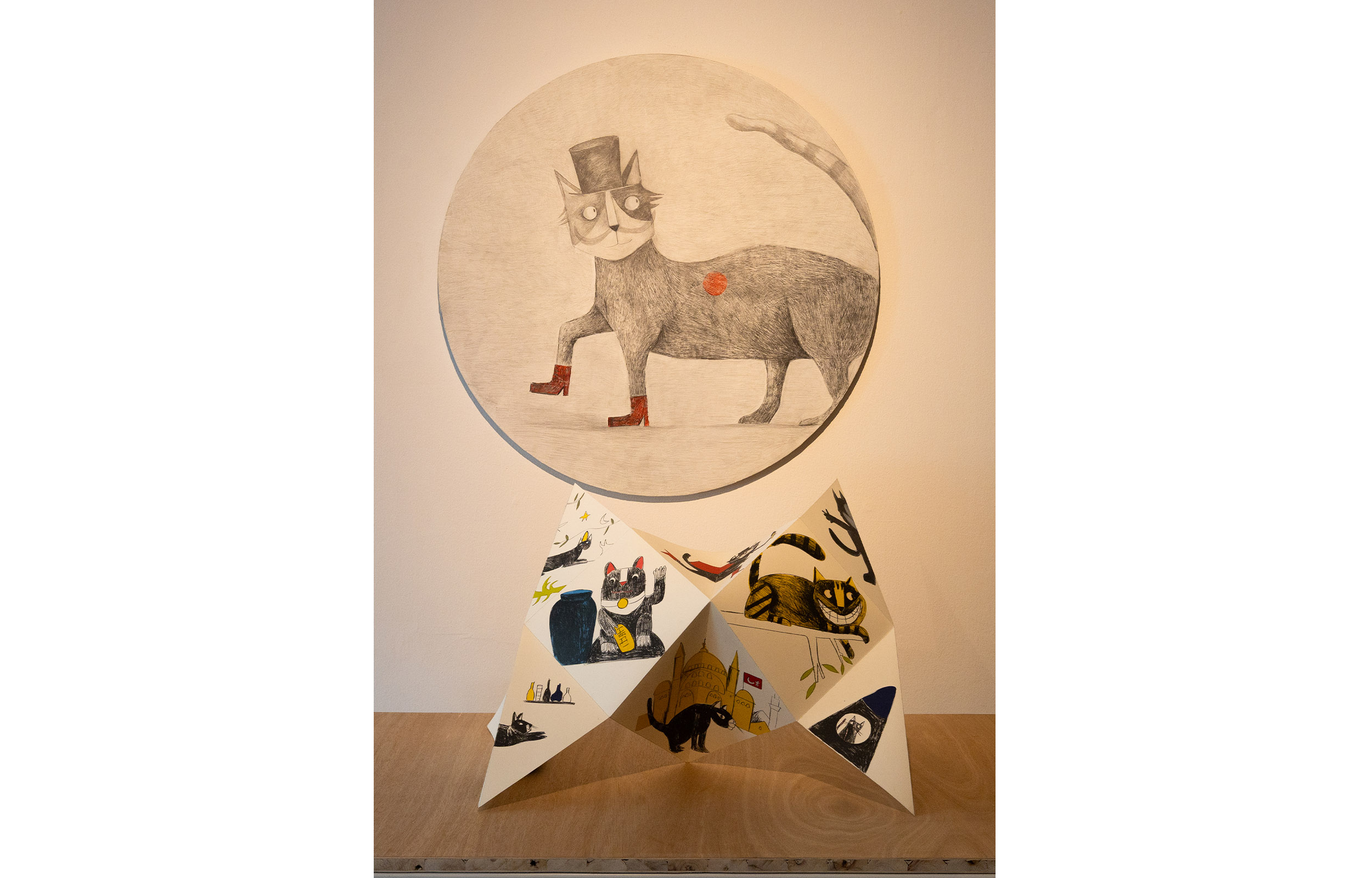
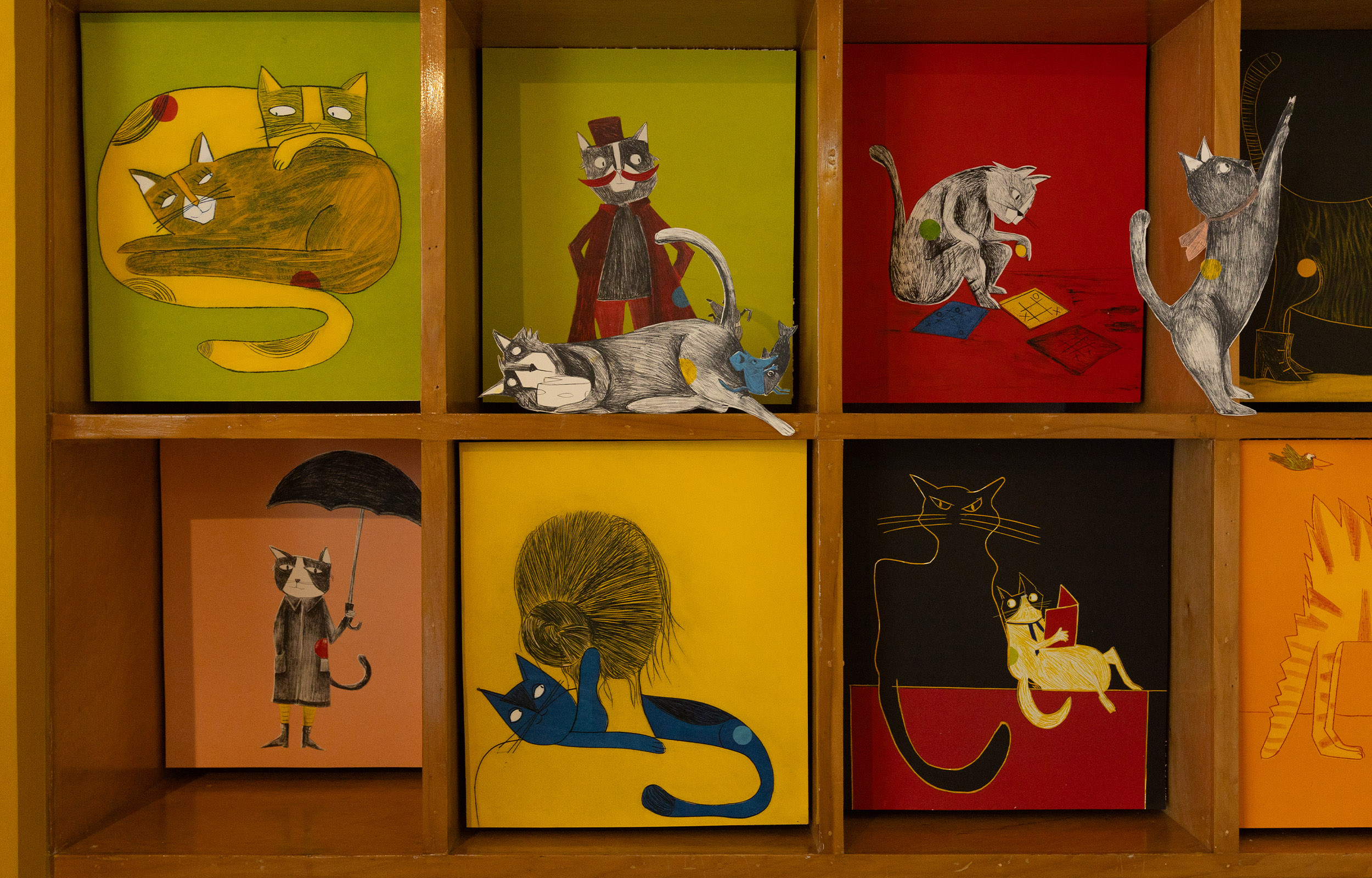
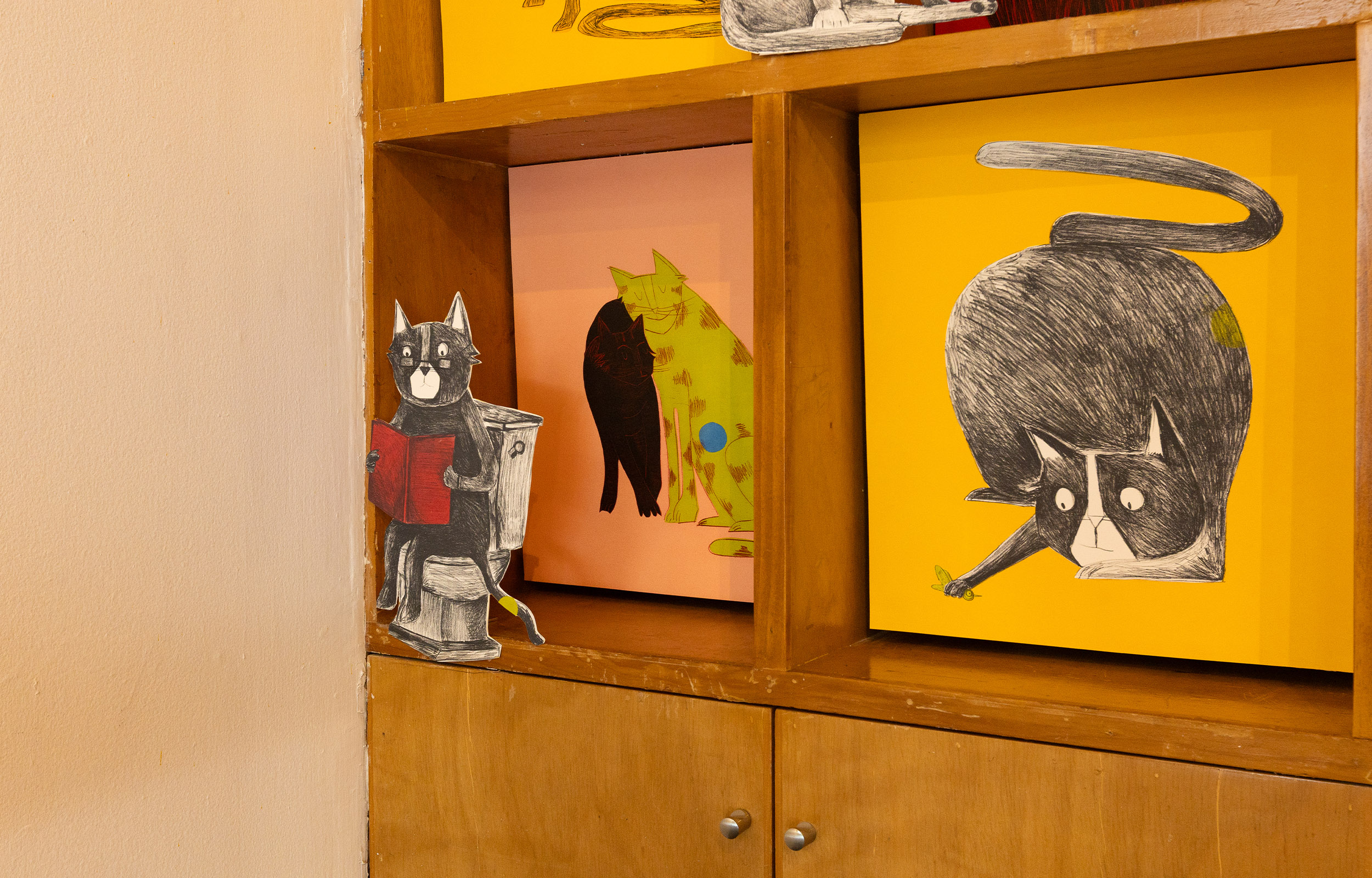
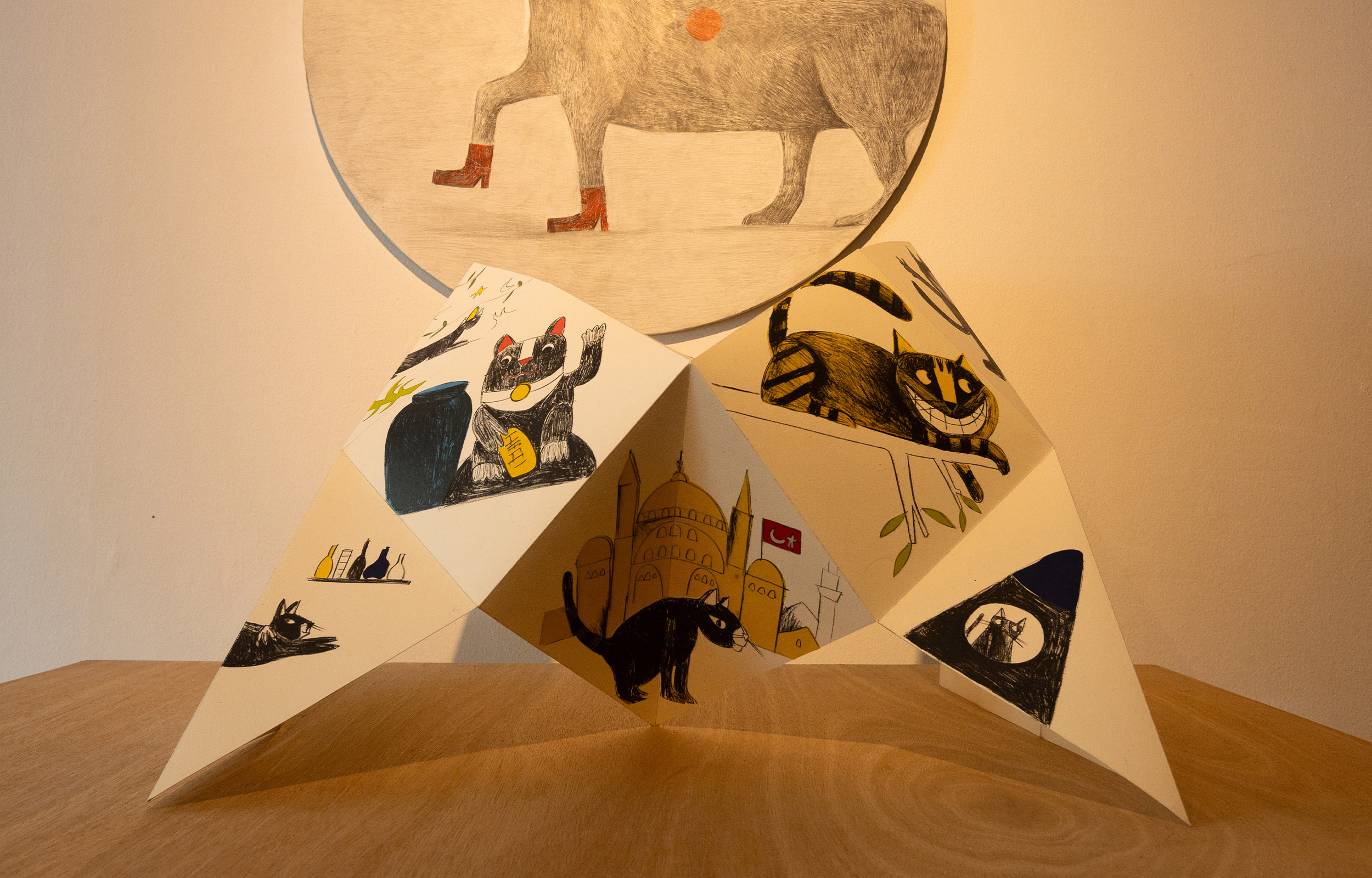
The exhibition gathers a hundred cats created especially for the occasion. Waterless lithographs and collographs displayed on a bookshelf show separate scenes from different books and other works by Rébora herself. Some of the cats are in the public domain ―taken from Charles Perrault’s fairy tale “Puss in Boots” (1695), E. T. A. Hoffmann’s novel The Life and Opinions of the Tomcat Murr (1820-1822), or Edgar Allan Poe’s short story “The Black Cat” (1843)― but have been reinterpreted by the artist and transferred to formats that explore the sculptural possibilities of the printed page.
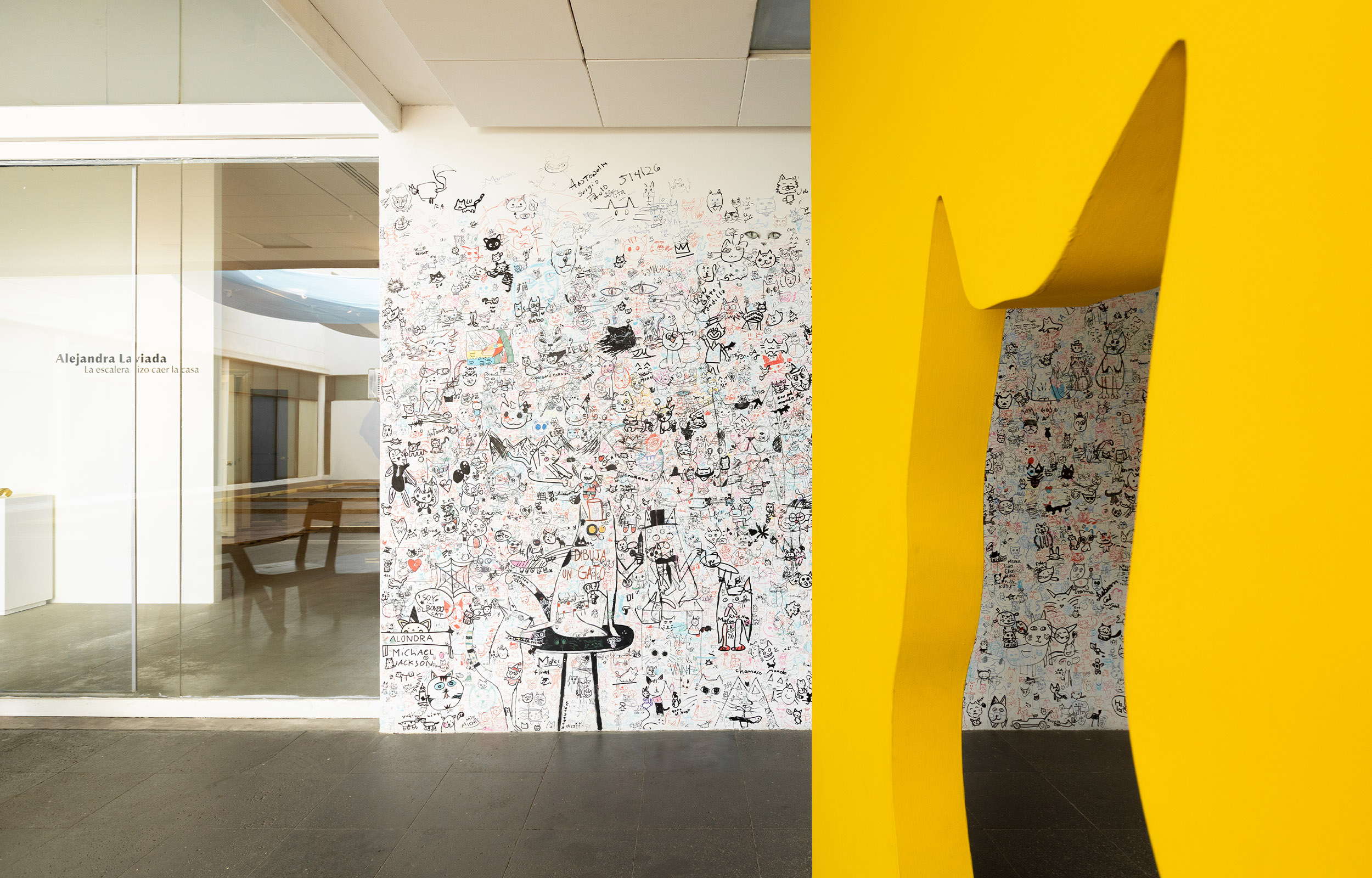
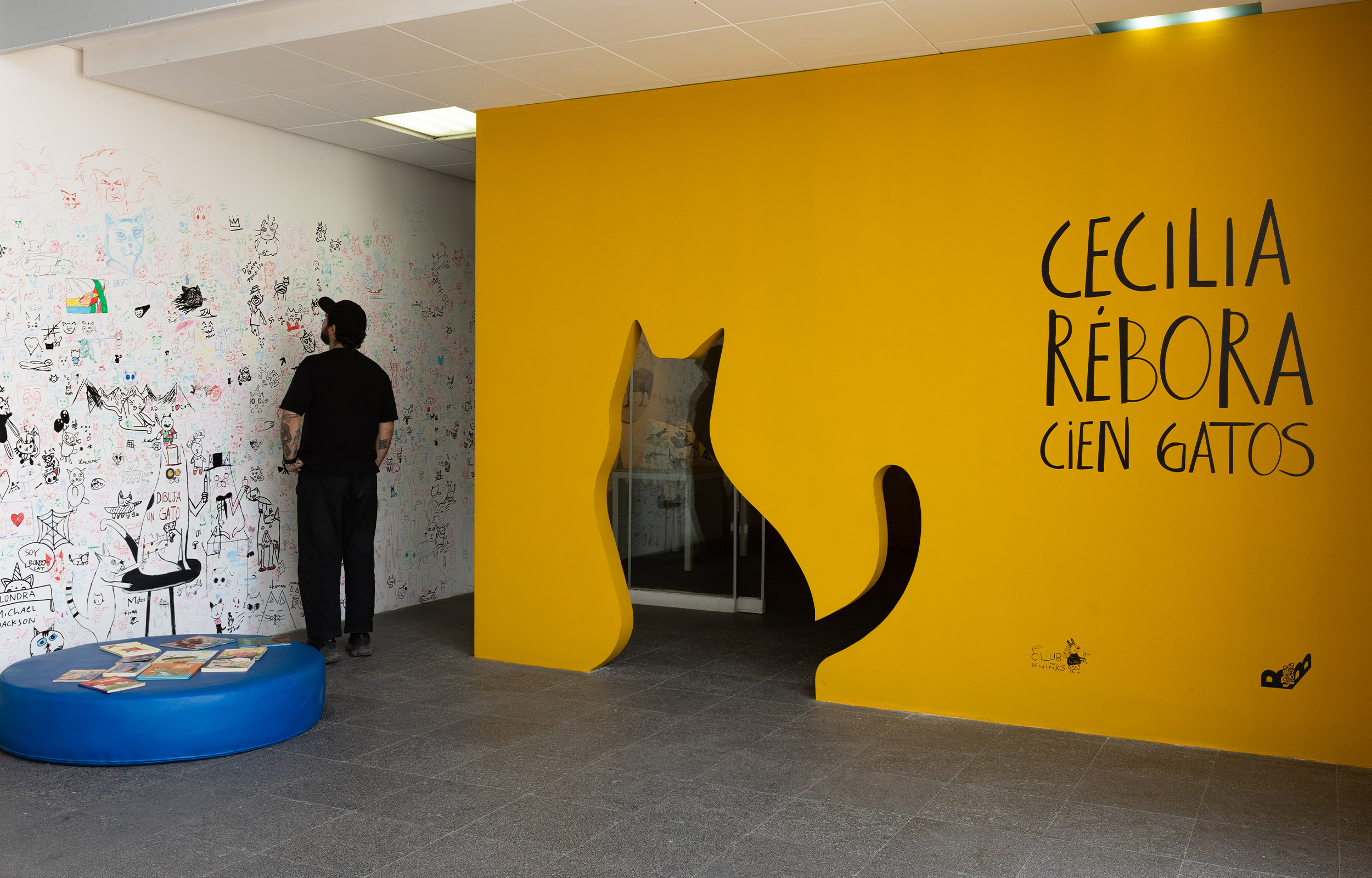
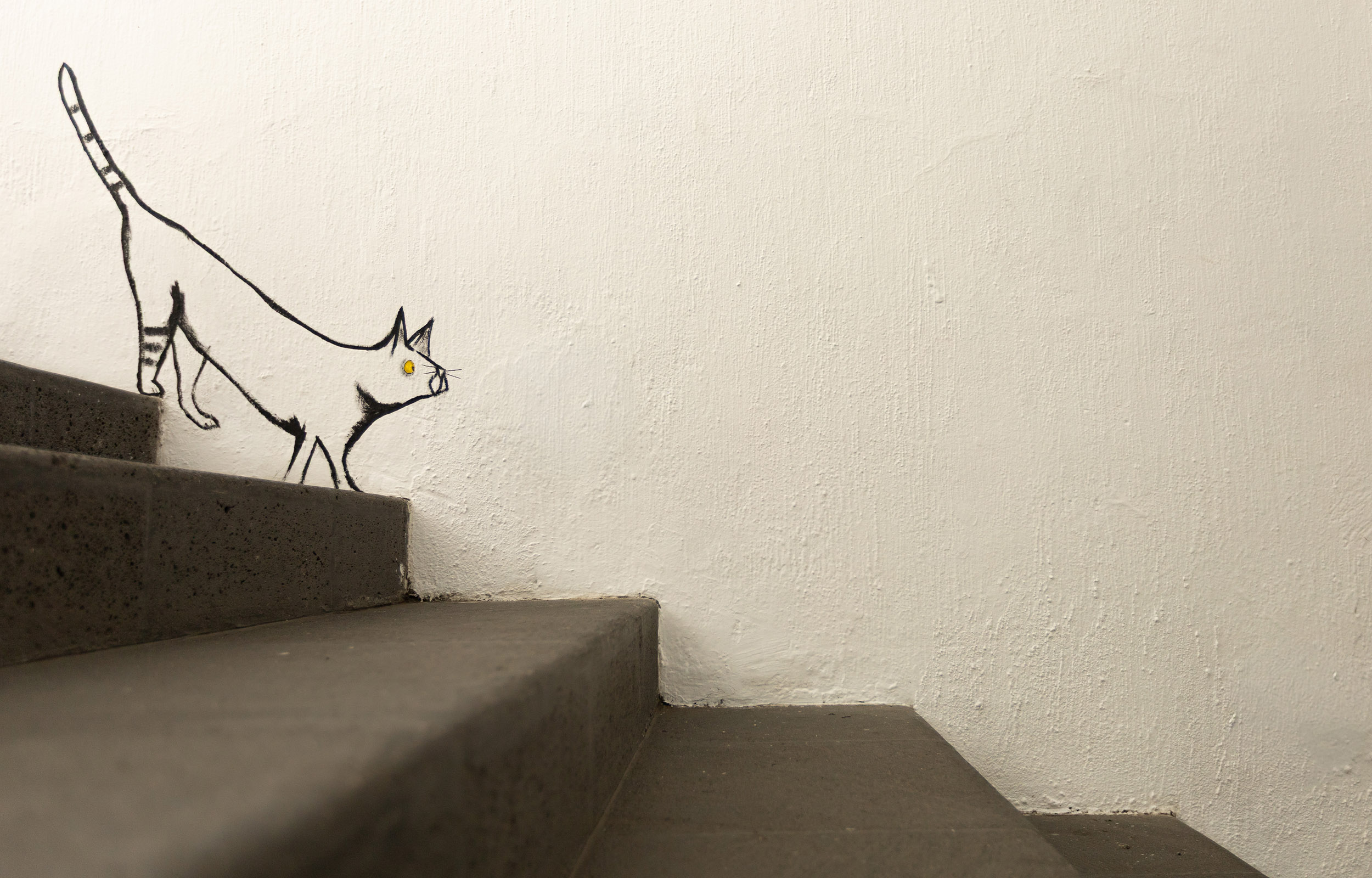
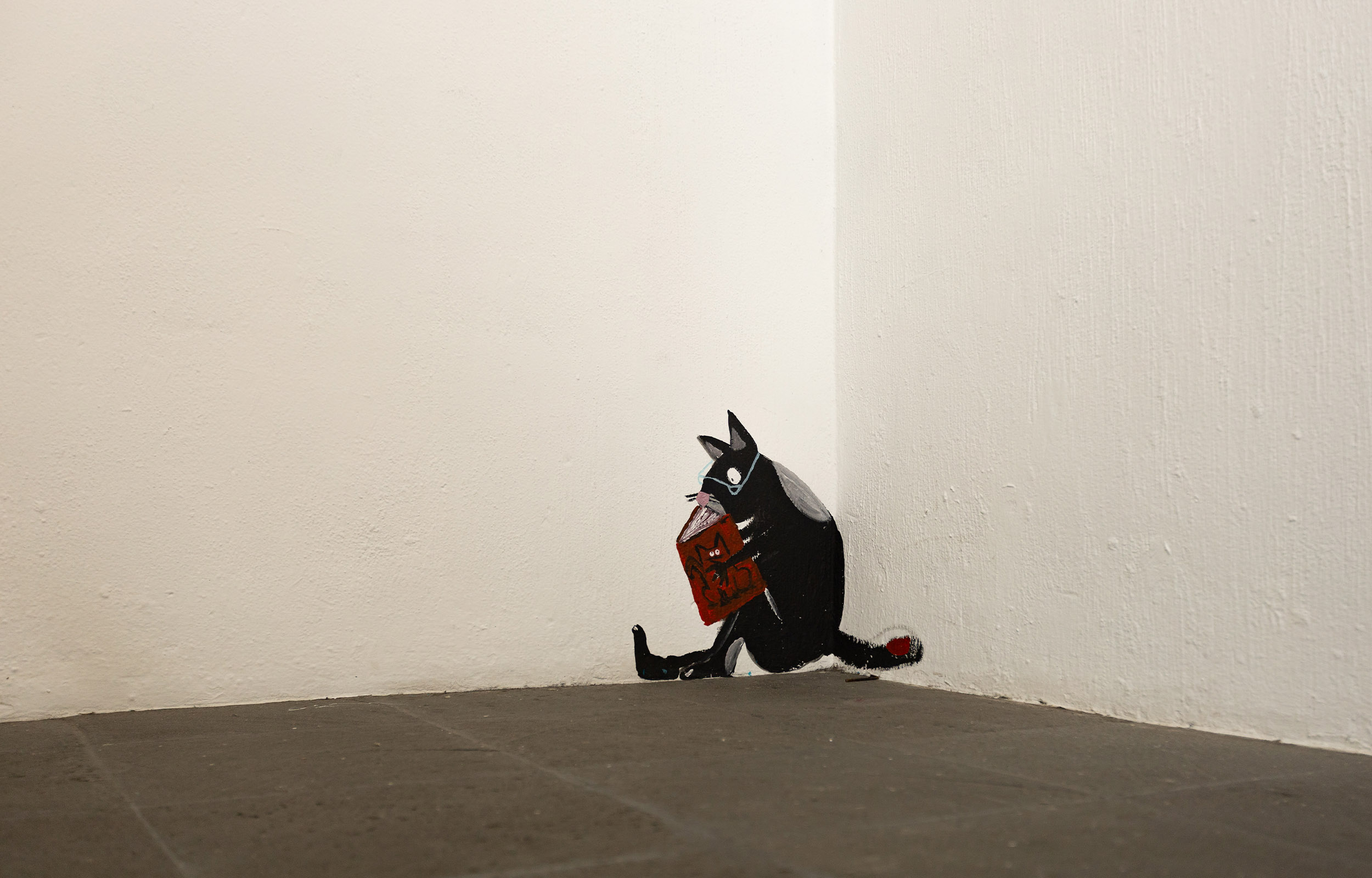
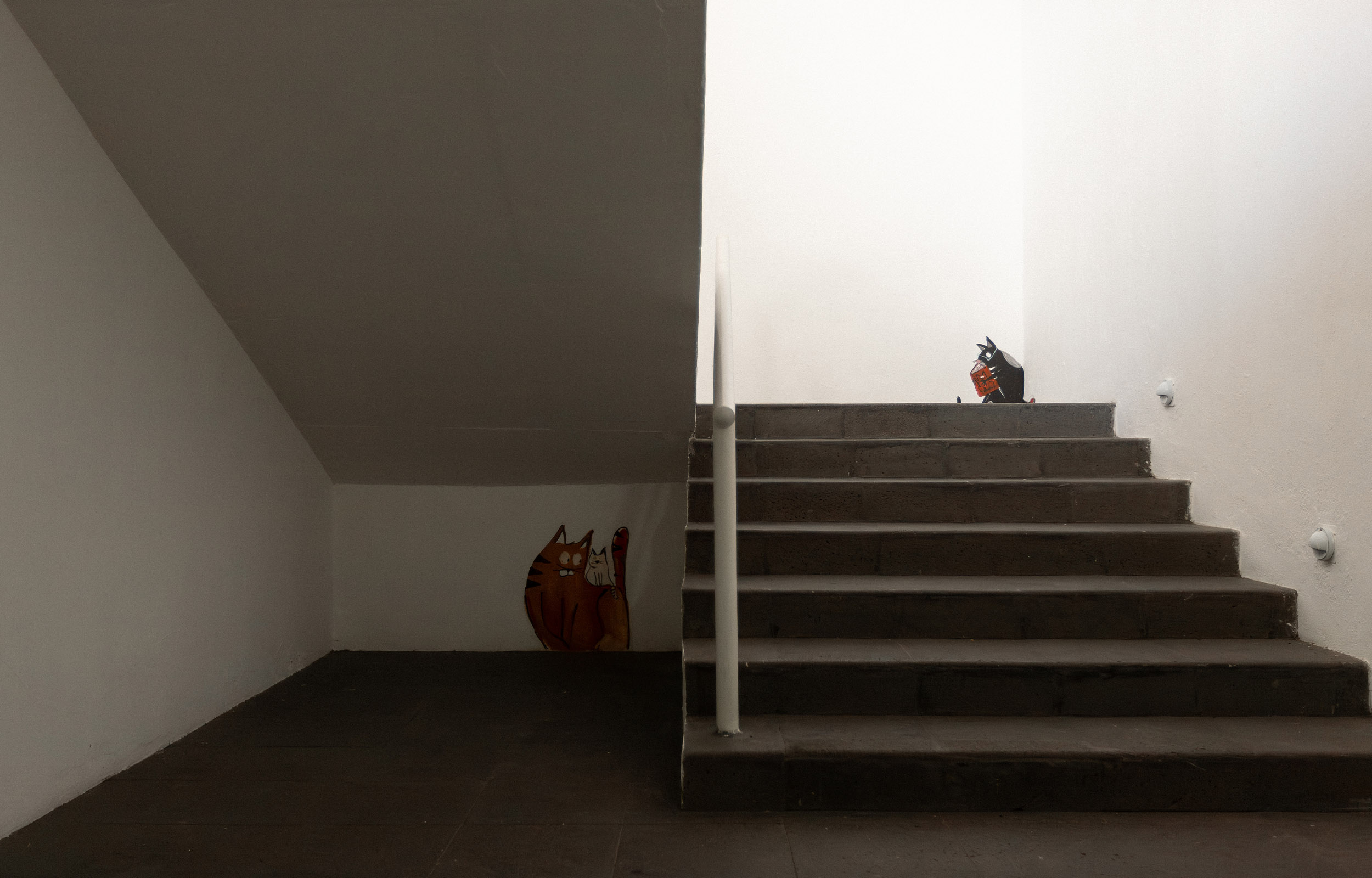
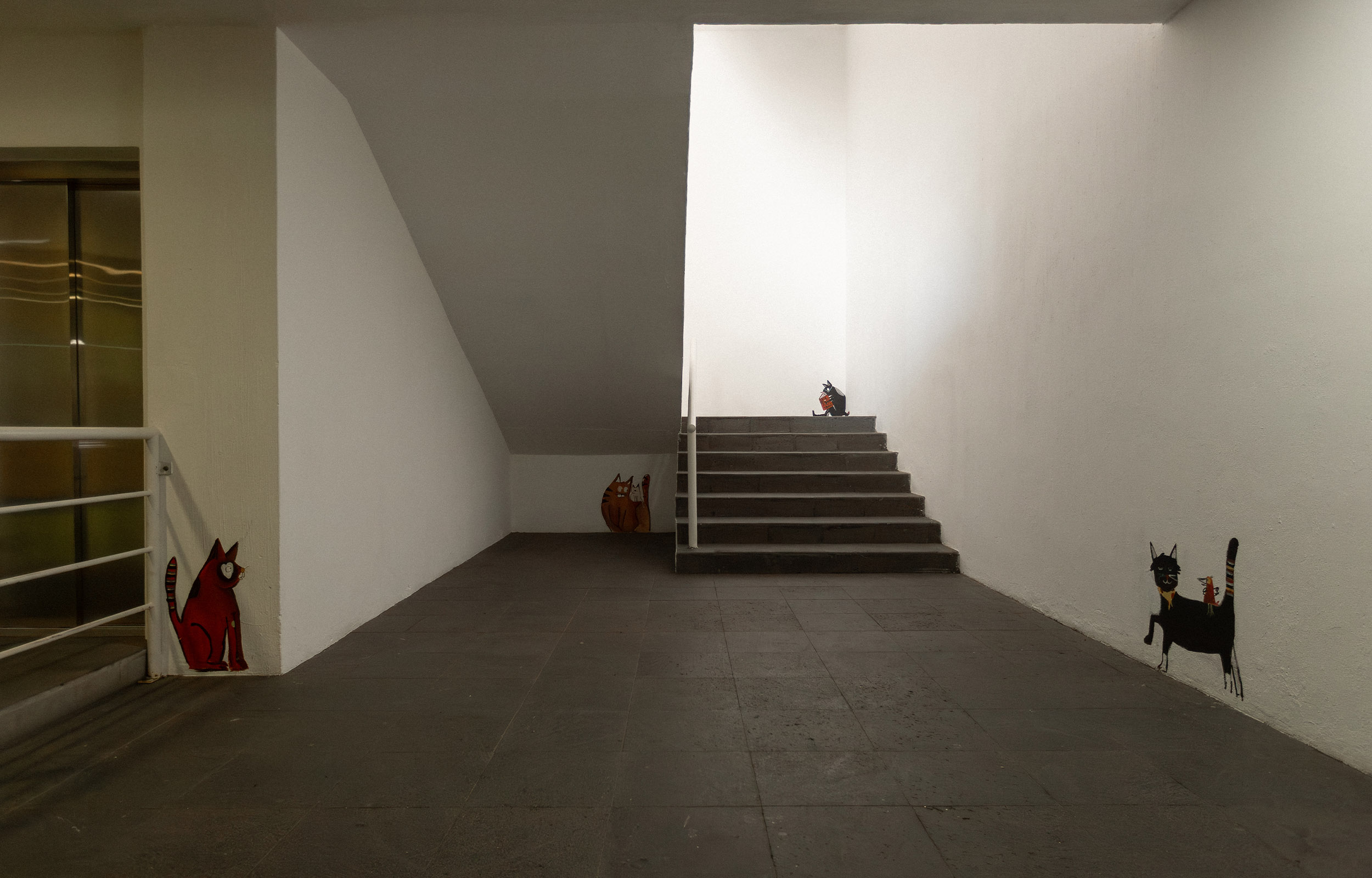
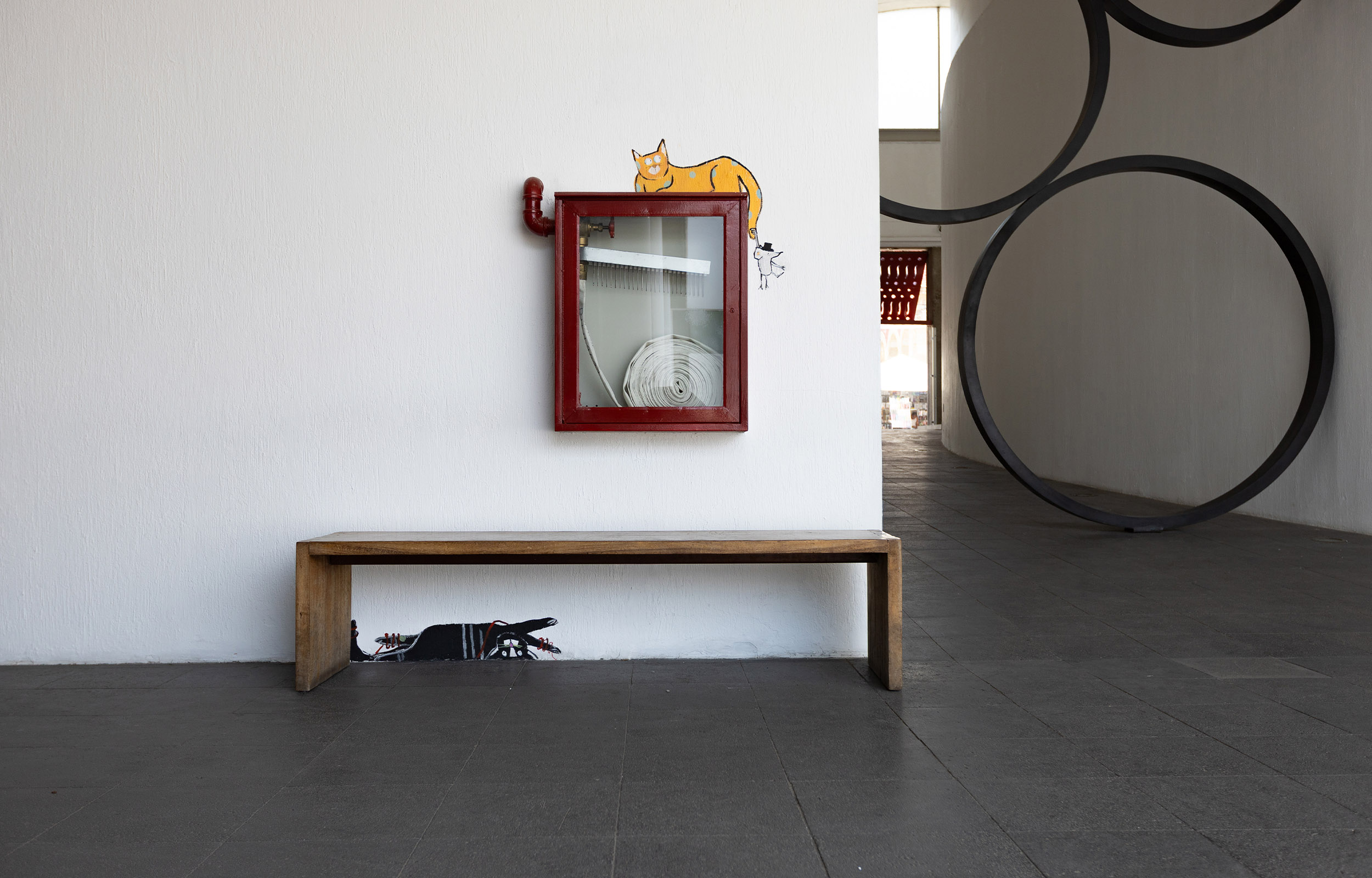
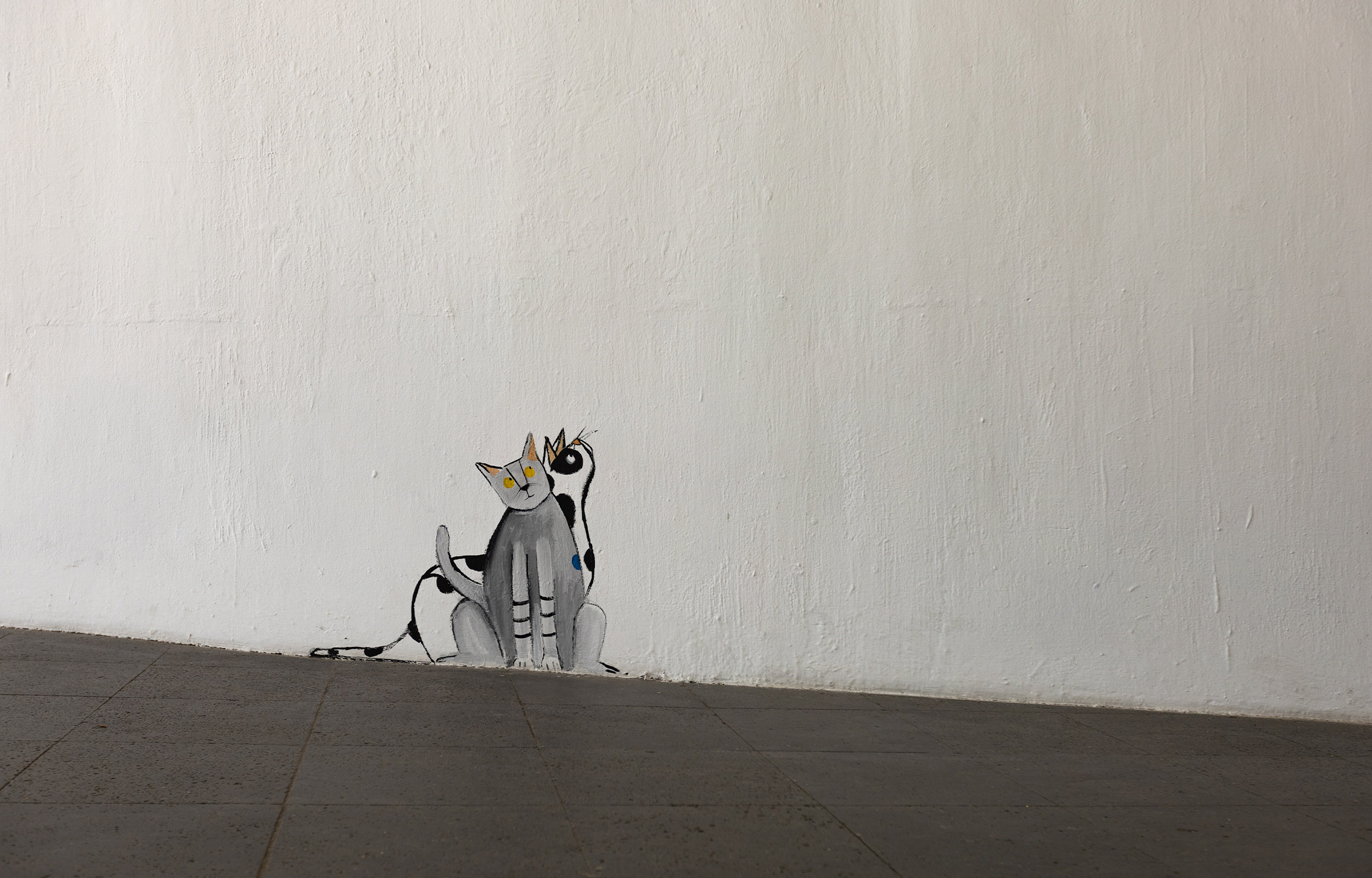
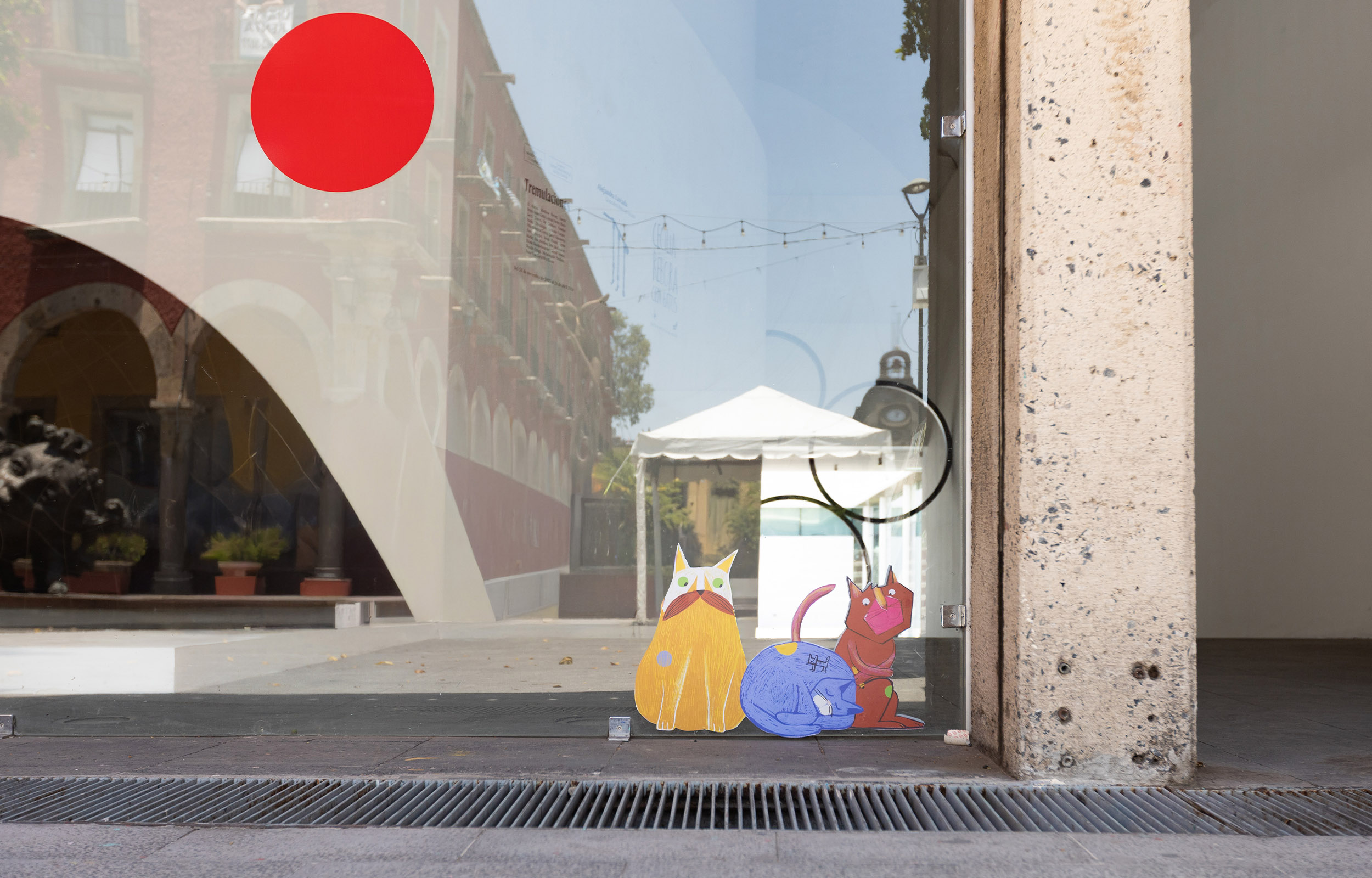
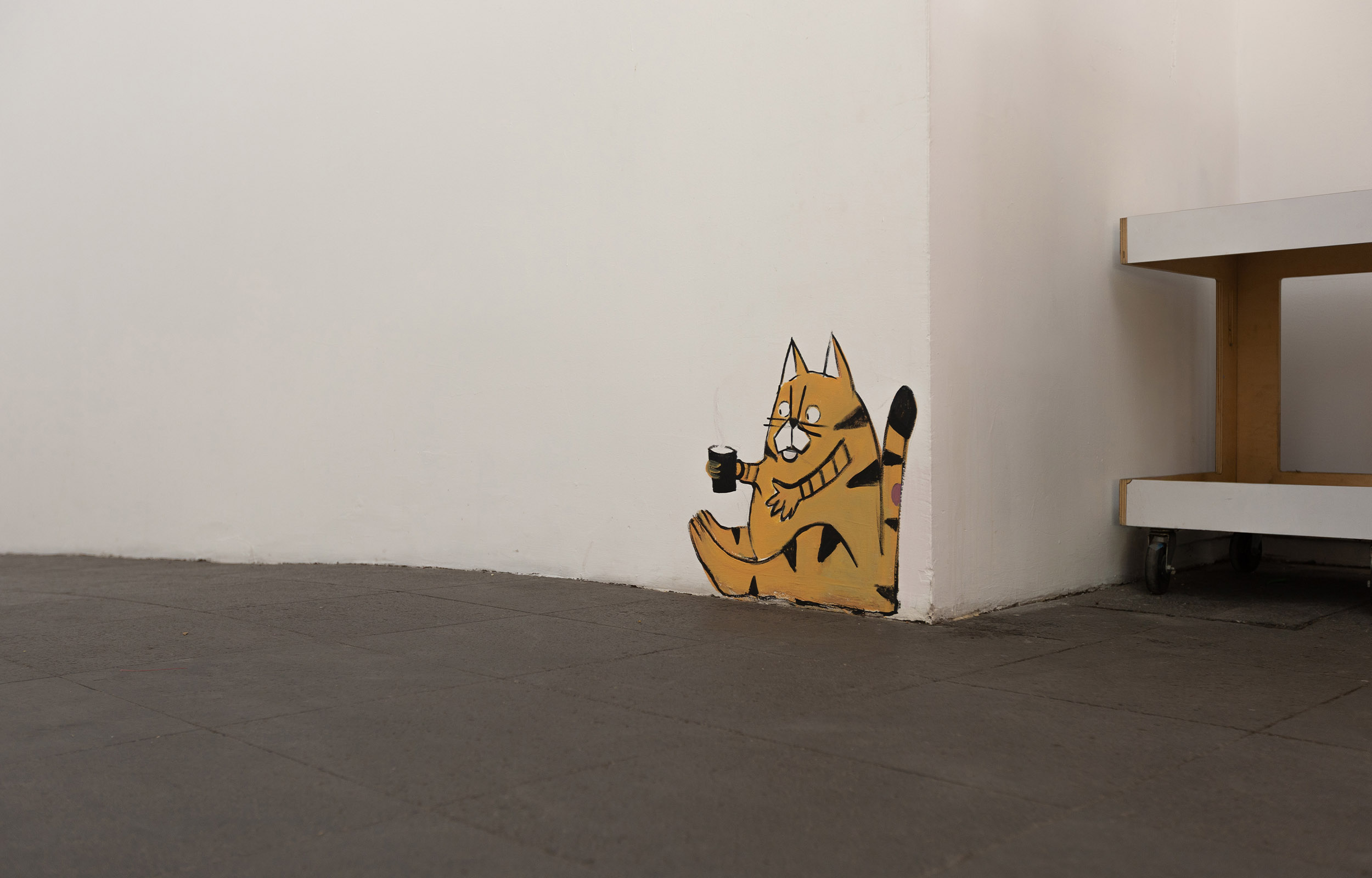
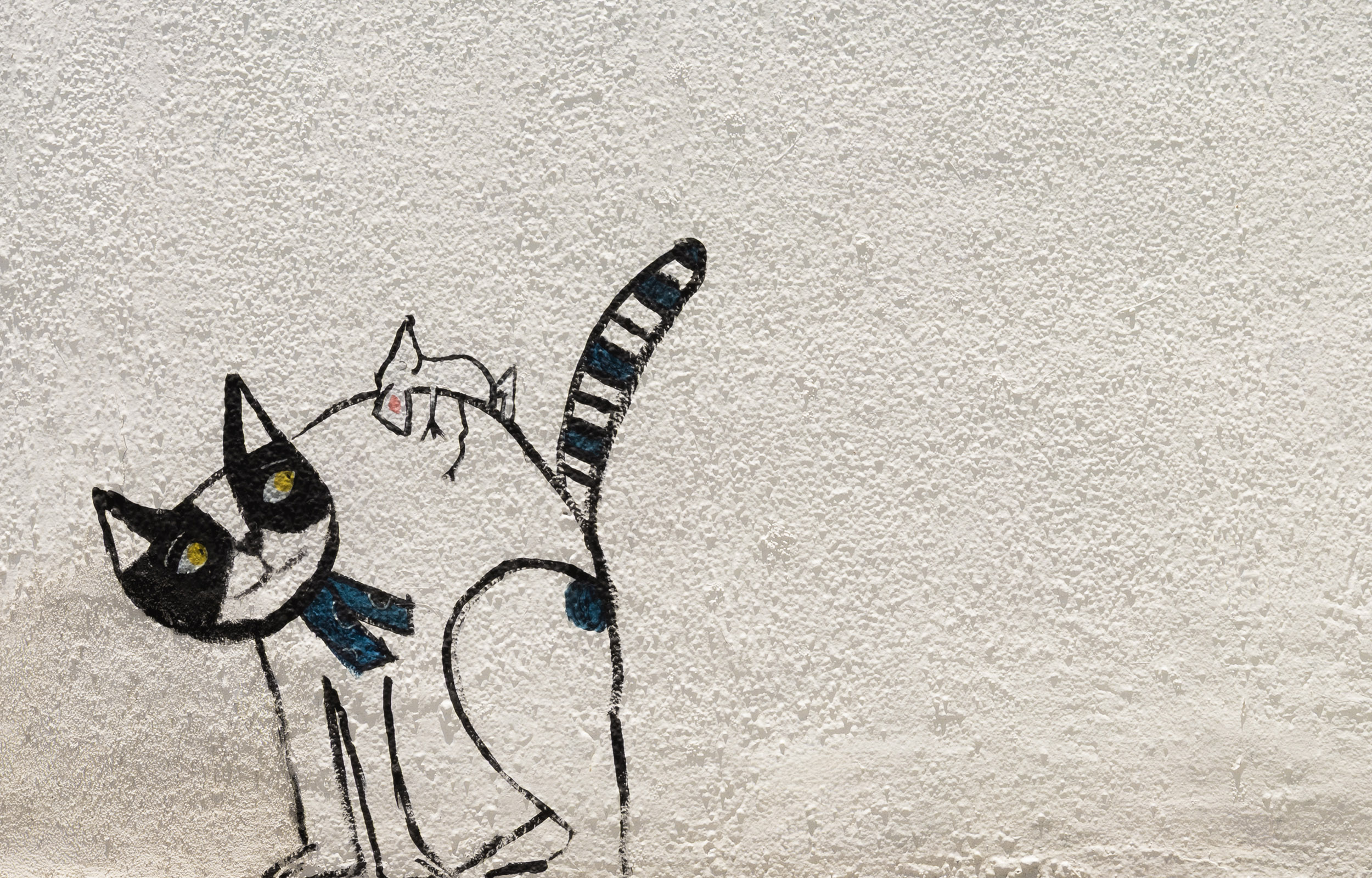
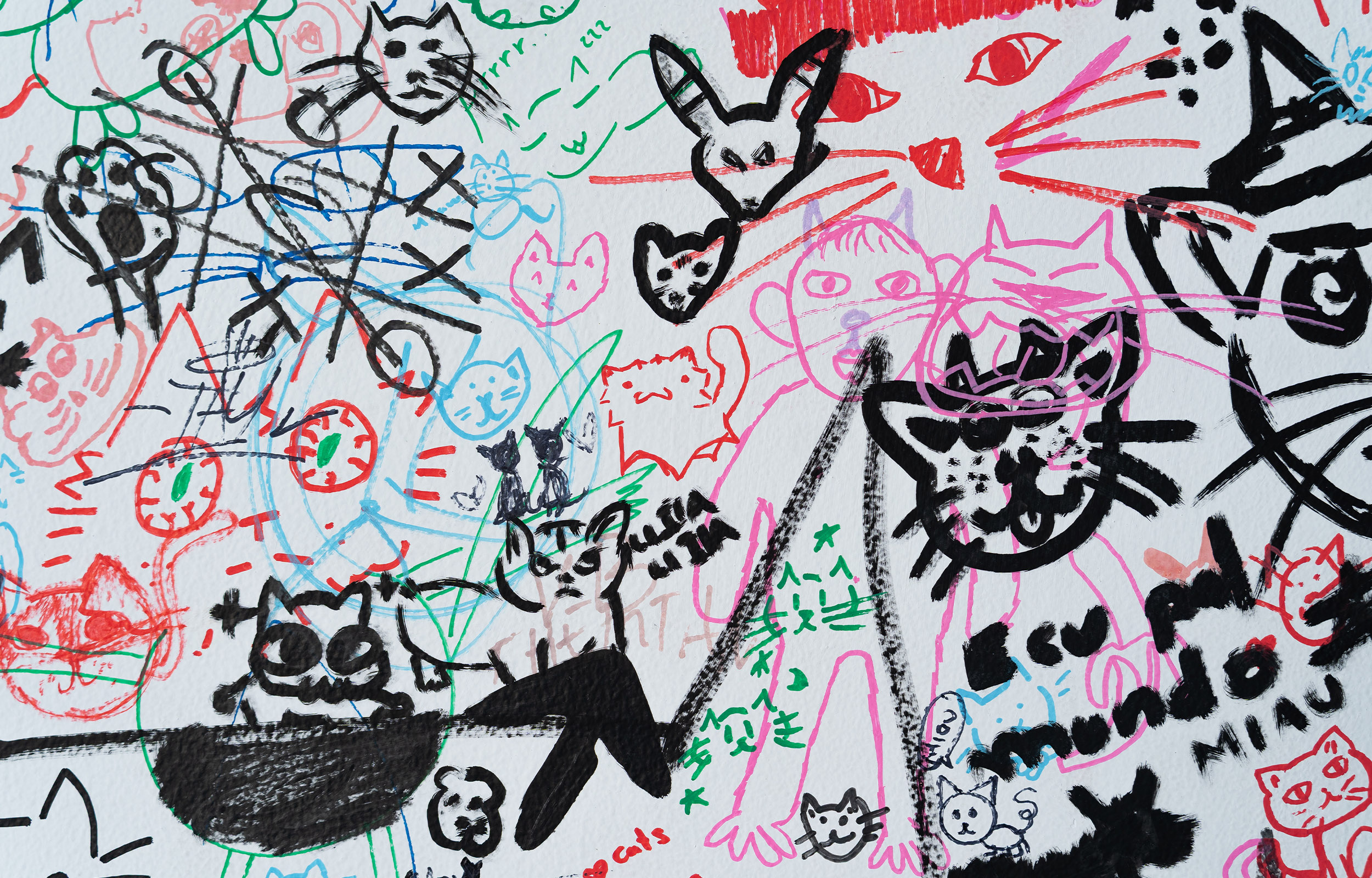
A Hundred Cats, the first exhibition of the Club de niñxs (MAZ’s Children’s Club), introduces children to contemporary illustration outside of the context of books. There are more than sixty cats in the exhibition hall, with others hiding elsewhere in the museum, waiting to be discovered. Before setting off to find them, we invite you to draw your own cat on the mural: an exercise of accumulation and reiteration that celebrates the many different gestures, emotions, and shapes that a cat can embody.